Global challenges and Uzbek insurance market trends

The last few years have been exhilarating and challenging time for an industry that is traditionally risk-averse and slow to change. As we look to 2025 and beyond, insurers must harness the momentum they’ve gained to meet a host of new difficulties. These include macroeconomic and structural headwinds, increased demands regarding climate risk and social purpose, new forms of competition, changes in reporting and accounting standards, and the exponential growth in digital innovation. Regardless of how insurers capitalise on these trends, they’ll need to reassess the future and reimagine their place in the world.

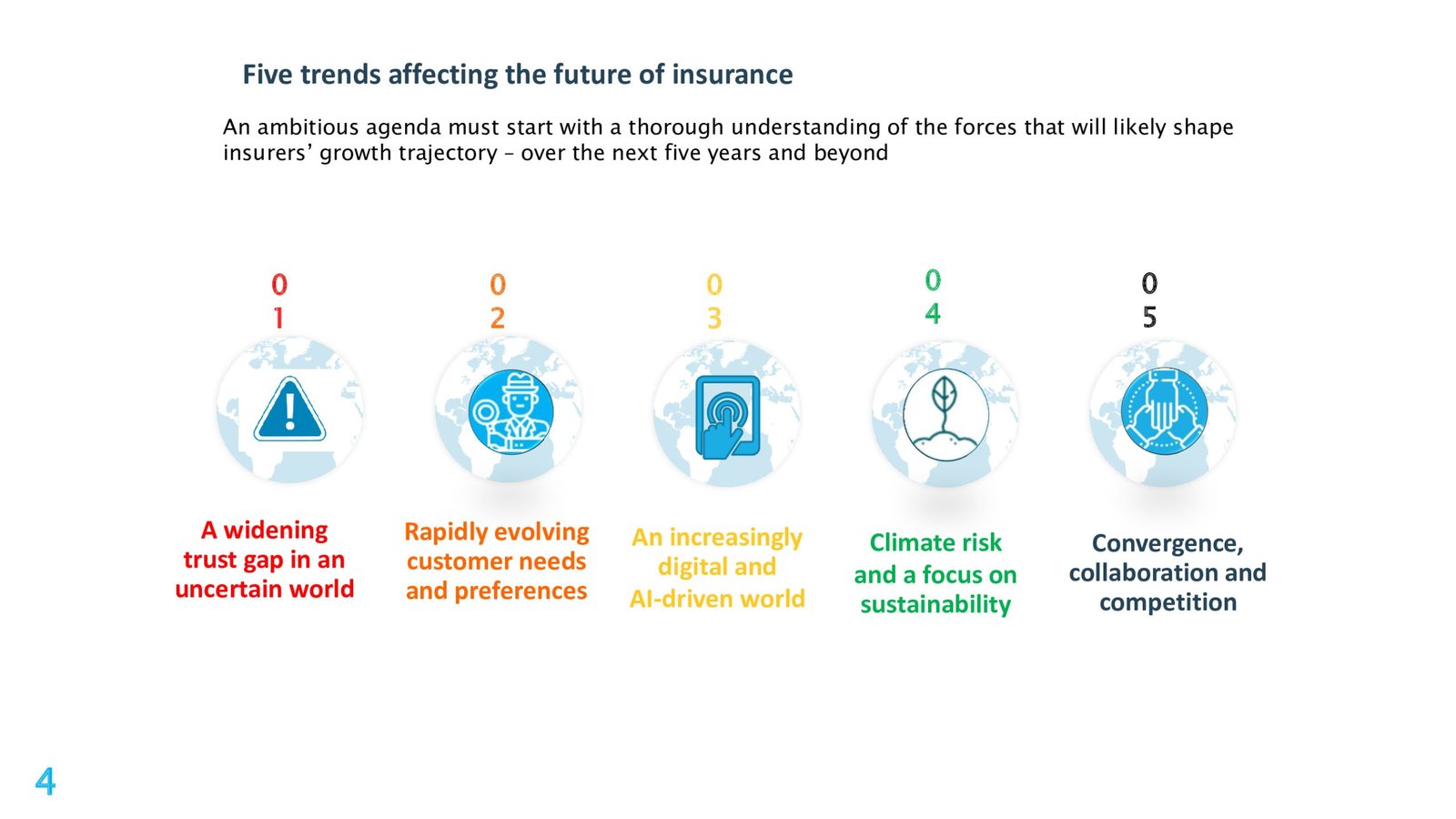
An ambitious agenda must start with a thorough understanding of the forces that will likely shape insurers’ growth trajectory – over the next five years and beyond:

  • A widening trust gap in an uncertain world
  • Rapidly evolving customer needs and preferences
  • An increasingly digital and AI-driven world
  • Climate risk and a focus on sustainability
  • Convergence, collaboration, and competition

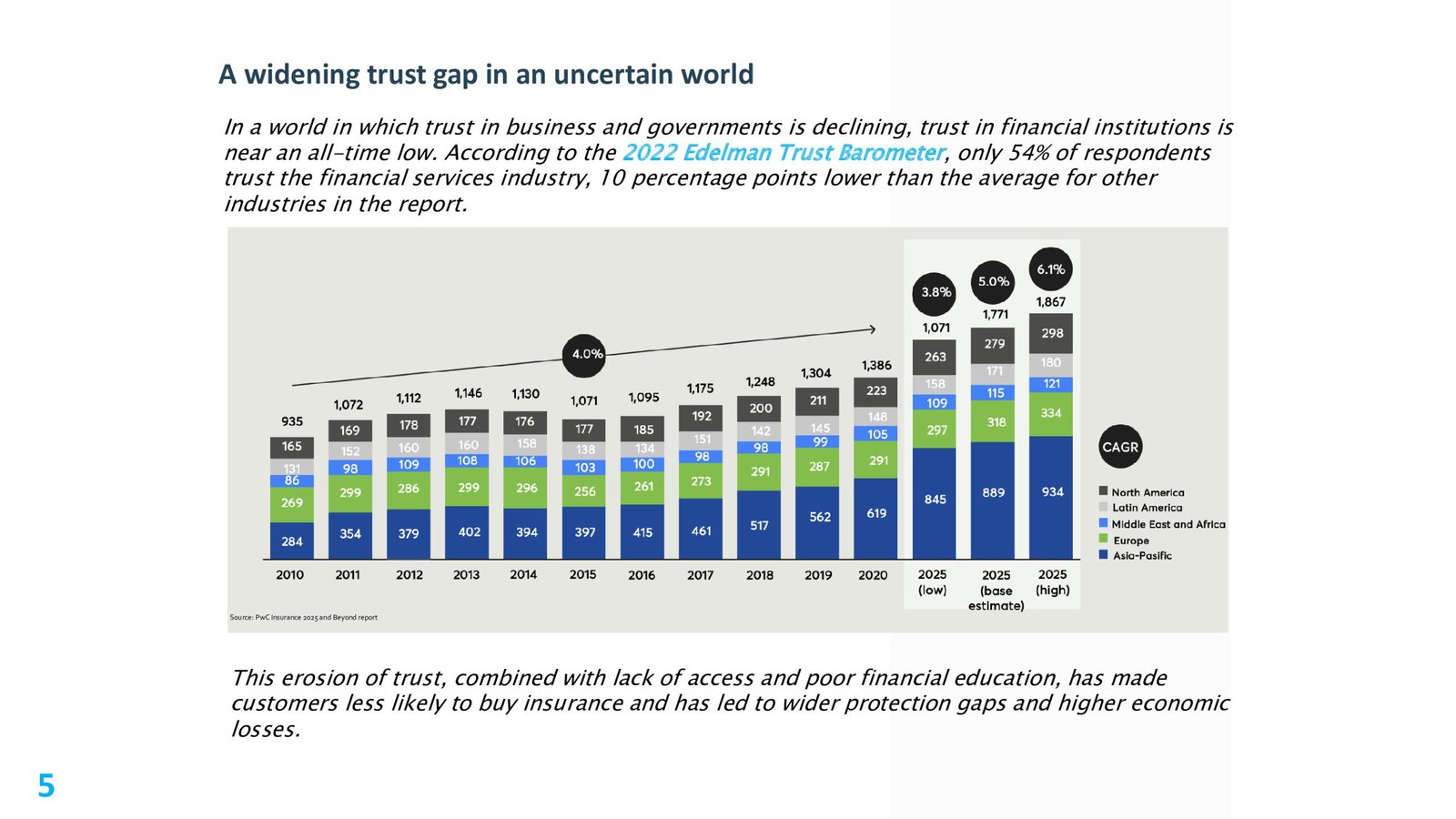
In a world in which trust in business and governments is declining, trust in financial institutions is near an all-time low. According to the 2022 Edelman Trust Barometer, only 54% of respondents trust the financial services industry, 10 percentage points lower than the average for other industries in the report.
b4916bec1b0bc10186defddd41750541 3 scaled 1
The Growing Confidence Gap in an Unstable World
 

Since 2000 the global protection gap (the difference between actual and insured losses) has drastically widened across all sectors, reaching US$1.4tn in 2020. Analysis estimates this gap could reach US$1.86tn by 2025, with Asia-Pacific region accounting for almost half of all uninsured risk. Trust is fundamental for insurance and insurers clearly have a much bigger role to play in our society and economy than just protecting risks. Wealth disparities accelerated by the pandemic and the continued erosion of middle class are some of the factors that have contributed to greater social distrust. To strengthen trust in insurance, some providers are focusing on alleviating social injustice by creating a more inclusive social and business environment. They are working to bridge access and coverage gaps by educating customers, creating affordable products, such as microinsurance, and more effectively distributing them to reach more customers. Some are also forming PPP with government, regulators and policymakers to address financial asymmetries, build solutions for future climate or pandemic related risks, and improve access to affordable healthcare.
b4916bec1b0bc10186defddd41750541 4 scaled 1

Rapidly changing customer needs and preferences

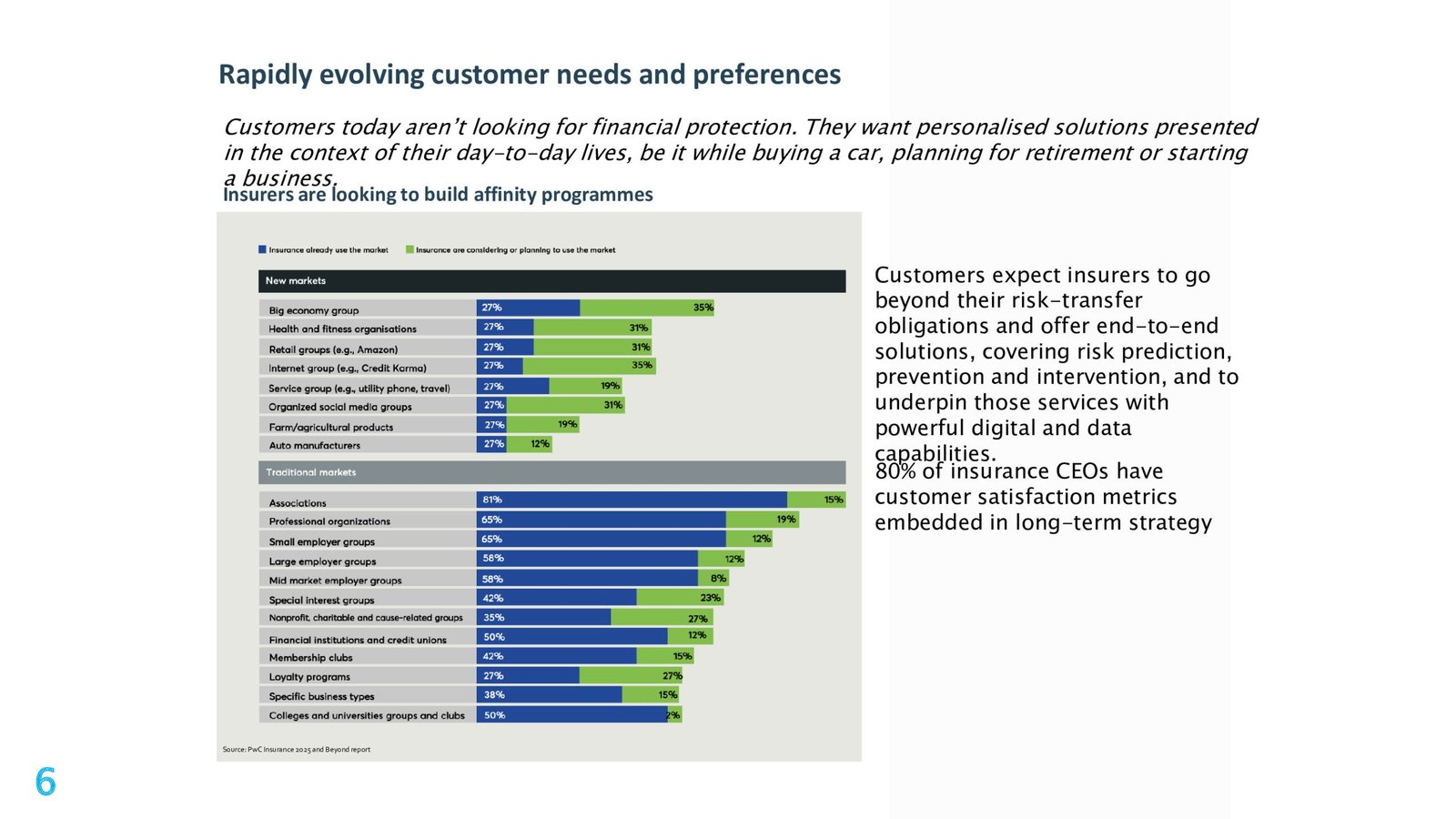
Customers today aren’t looking for financial protection. They want personalised solutions presented in the context of their day-to-day lives, be it while buying a car, planning for retirement or starting a business. Customers expect insurers to go beyond their risk-transfer obligations and offer end-to-end solutions, covering risk prediction, prevention and intervention, and to underpin those services with powerful digital and data capabilities.

To remain competitive, insurers must reimagine how they serve customers, provide advice, and capitalize on new partnerships and innovative engagements in order to create sustainable business models that drive growth and enhance the customer experience. Take for example, the rapid evolution of platform-based business models like marketplaces and embedded insurance. Figure illustrates the growth prospects of affinity programmes and markets that have emerged as insurers seek new partners, such as gig-economy groups and e-tailers, to sell insurance. The demand from consumers is such that we expect a significant portion of insurance revenues will migrate from traditional distribution to digital platforms offering insurance-as-a-service.
b4916bec1b0bc10186defddd41750541 5 scaled 1

An increasingly digital and AI-driven world

Insurance industry is currently in a race to get up to speed with every one of the conceivable outcomes digitization, particularly artificial intelligence brings to the table. AI, is one of the key elements of the digital age and, has disrupted insurance industry as a whole and underwriting risk assessment in particular, and therefore holds future prospects for insurance.

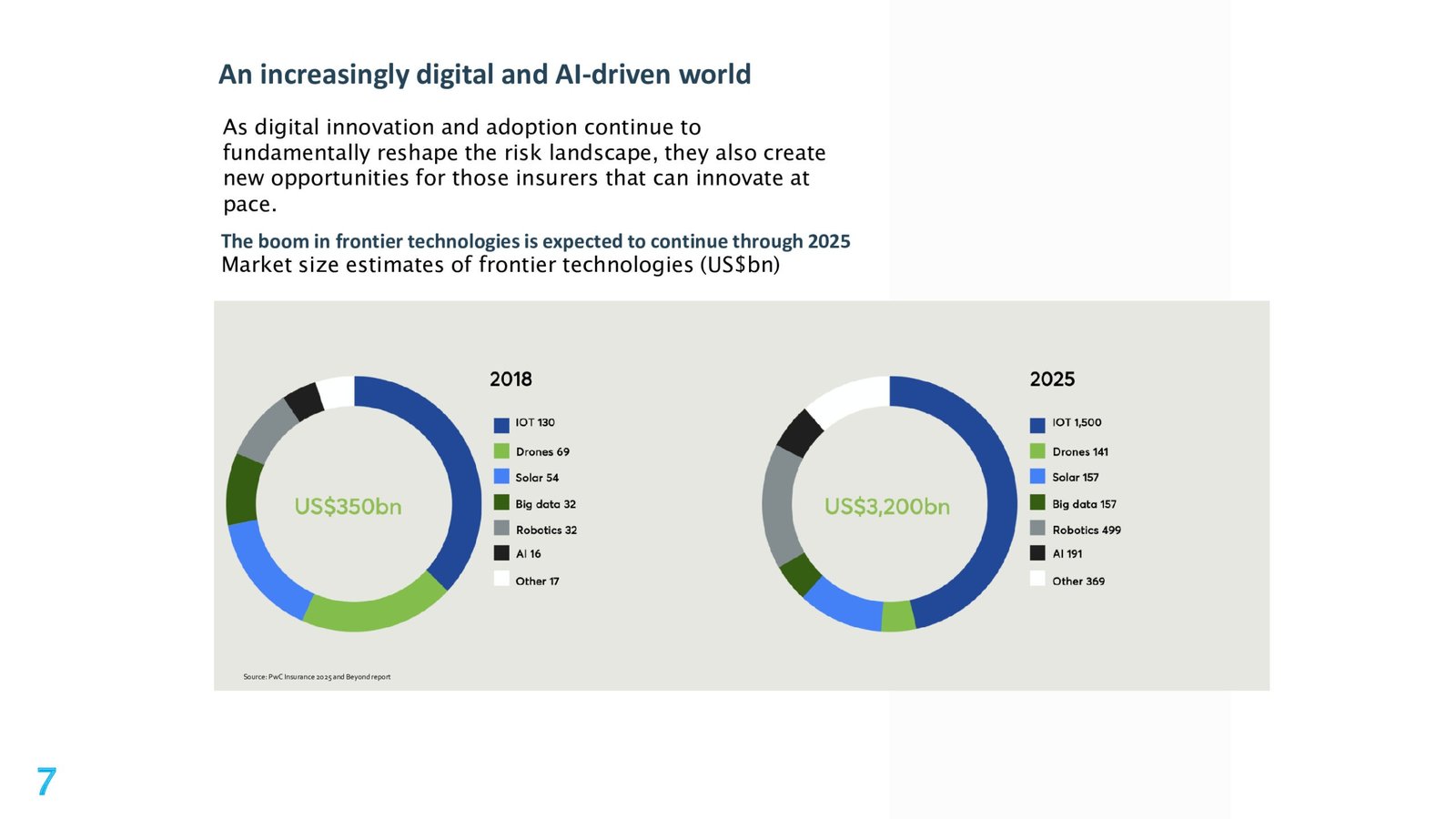
In their 2021 Technology and Innovation report, UN analysts estimated that the size of the frontier technologies market will multiply by a factor of nine by 2025, with innovations in the internet of things (IoT), big data, solar panels and robotics contributing to US$3.2tn

Automation and AI are already changing the way insurers interact with consumers across the value chain – from product design, customer acquisition, engagement, risk management, underwriting to billing and claims – every one of these territories are being changed by the digitization.

With the omnipresence of computers and mobile devices, in any case, the volume of information exhibit on the planet has detonated. And with the widespread ‘Internet of Things’ (IoT) changing into a tangible reality, this quantity will just keep on growing. What’s more, this jumbo ocean of data has rendered established older kinds of assessment outdated. Artificial general intelligence and machine learning algorithms are currently impacting how insurance professionals are assessing risk.

As of not long ago, insurance professionals relied on summed up application forms and simple background checks, bolstered against predefined information sets, to decide premium costs. Though these are still in practice but no longer hold the same value as it used to.

Recent advancements in digitasation of client interactions have included the growing use of so-called bionic advisers that integrate human and digital client experiences. It’s now possible to imagine that a life insurer can predict and intervene in health events based on a simulated digital twin of a customer.

And the industry is edging closer to broader adoption of similar scenarios that can be applied to insurance products across coverage lines, with data inputs from smart home sensors, vehicle telematics data, factory and warehouse sensors, and a growing number of devices with IoT technology.

The insurance sector is continually tormented with stories of fraud cases and AI (artificial intelligence) is the answer for this issue. Machine learning algorithms can observe correlations and trends that are probably going to beat human knowledge and may pass by unnoticed in the risk assessment process. On the far side identifying fake claims, the machine algorithms additionally give an evaluation of the potential liability of the cases and, control and management measures to combat any further deceitful fraudulent claim filings.
b4916bec1b0bc10186defddd41750541 6 scaled 1

Climate risk and emphasis on sustainability

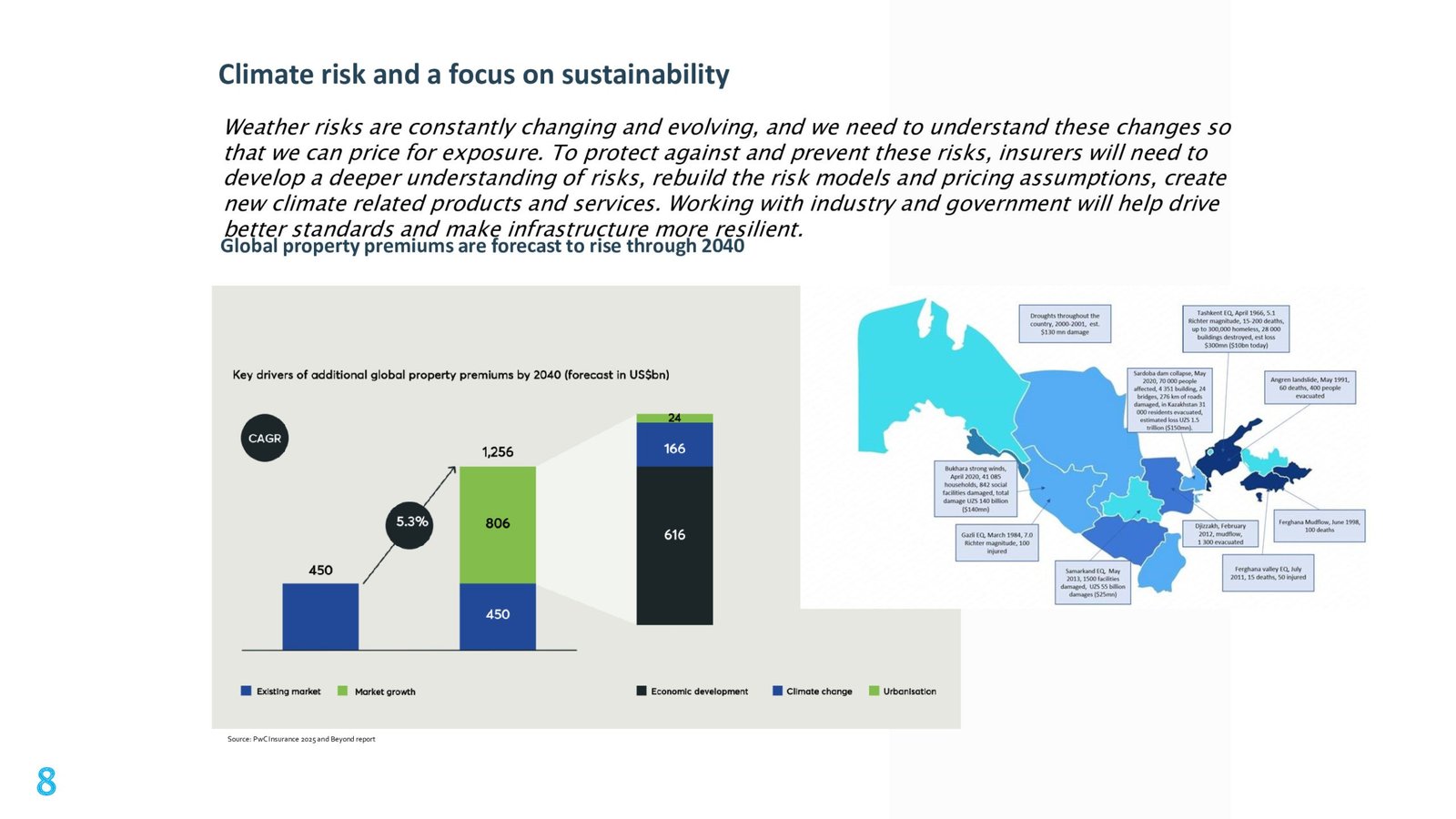
Weather risks are constantly changing and evolving, and we need to understand these changes so that we can price for exposure. To protect against and prevent these risks, insurers will need to develop a deeper understanding of risks, rebuild the risk models and pricing assumptions, create new climate related products and services. Working with industry and government will help drive better standards and make infrastructure more resilient.

The most recent diaster is a cyclone with a strong wind that hit the Bukhara region on April 27, 2020 with significant damage. 41,085 households and 842 social facilities were damaged. The amount of paid losses to greenhouses alone amounted to UZS 12 billion (appr. $1.2 million). The total amount of material damage amounted to UZS 140 billion (appr. $14 million).

As a result of the breakthrough of the dam of the Sardoba reservoir in the Syrdarya region of the country, more than 70 thousand residents of flooded settlements in three districts of the region suffered. 4351 residential buildings, 24 bridges, 276 kilometers of roads were flooded or damaged. On the Kazakh side, five villages were flooded, over 31 thousand residents were evacuated. 845 residential buildings were flooded. Preliminary estimated losses and expenses amounted UZS 1.5 trillion (appr. $150 million). An overlayed map shows the details of this disaster

It is estimated that the probable maximum losses from earthquakes and flood could be approximately $2 billion on average a year, or 3.5% of GDP (2021). The damages put significant burden on the already stretched government and regional budgets. Due to insufficient funding from all sources, 92.4% of damages caused by earthquakes remain uncovered, and 78.8% – by flood.

The reinsurer Swiss Re estimates that up to US$166bn of premiums could be generated globally by 2040 as a consequence of climate change, mostly in the property insurance segment, given the threat of exposure to catastrophes such as floods, earthquakes, and extreme weather events like storms and wildfires.

Because of their inherent expertise in risk management, insurers and reinsurers have a clear opportunity and societal obligation to lead the way in fighting the global climate crisis. Setting a long-term ambition that’s supported by tangible near-term commitments is the right first step to expand their relevance beyond risk transfer and to take an active role in changing outcomes on a broader scale.

Insurers can work with customers to better adapt to climate change by investing in more resilient infrastructure and supply chains and providing advice to help clients address the physical and transition risks. However, meaningful change will require collective action across the sectors of the industry, including public-private partnerships in which insurers can collaborate with regulators, local governments and policymakers to mitigate climate risk. This sort of collaborative effort can take the form of developing holistic catastrophe risk models, investing in data collection and climate adaptation research, and fostering coherent and consistent climate policies and regulatory frameworks, among other initiatives.
b4916bec1b0bc10186defddd41750541 7 scaled 1

Convergence, Cooperation and Competition

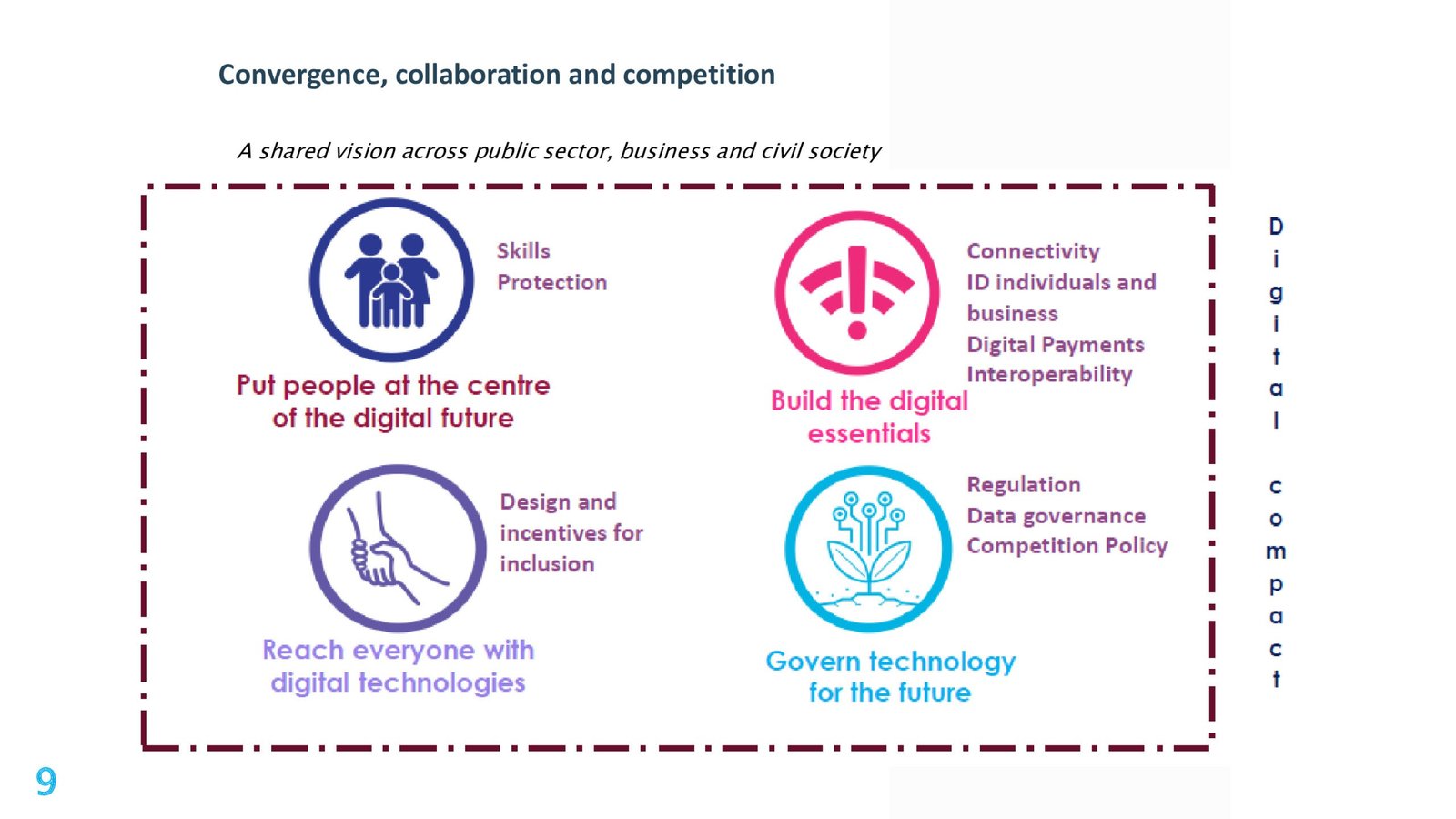
A digital, data-rich economy is allowing organisations to share and collaborate within and across industry boundaries in new ways and create new value propositions for customers. Whether it’s in mobility, financial wellness, health, or SME business needs, much investment is converging around digital platforms such as ecosystems and marketplaces.

To connect with customers in a way that is relevant to them, insurers need to rethink their partnerships and collaborations to go beyond traditional industry and competitive boundaries, and engage in ecosystems in which insurance is only a part of the customer value chain.

Successful business models will drive increased collaboration with traditional competitors, emerging Insurtechs, big tech companies and adjacent industries like manufacturing, retail and healthcare.


b4916bec1b0bc10186defddd41750541 8 scaled 1

 There’s also an expectation that insurers will need to play a larger role in making up for government shortfalls in climate change, elder care and healthcare. Collaboration will be crucial for the industry as it tries to solve for bigger systemic risks through public-private partnerships and build industry-level solutions.

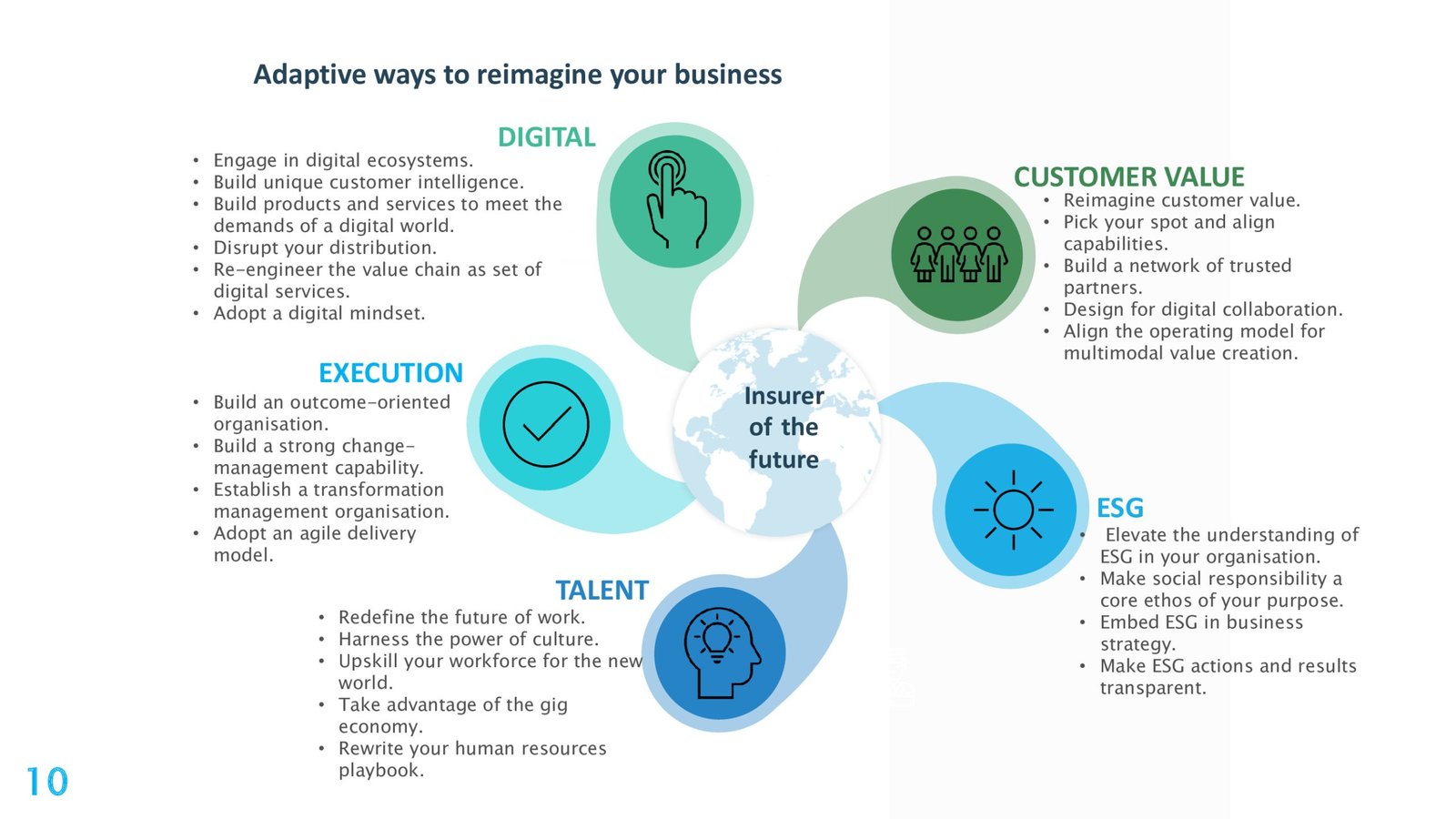
Adaptive ways to reinvent your business

Regardless of how insurers choose to address these trends, they need to envision the future and reimagine their place in the world. After successfully navigating the pandemic’s first two years, now is the time to be bold and create an ambitious agenda. Though the scope of the change is broad and complex, we have defined FIVE interconnected and mutually reinforcing strategic imperatives for all insurance to consider as they embark on their next phase of growth.

DIGITAL – Go on the offensive with digital

  • Engage in digital ecosystems.
  • Build unique customer intelligence.
  • Build products and services to meet the demands of a digital world.
  • Disrupt your distribution.
  • Re-engineer the value chain as set of digital services.
  • Adopt a digital mindset.

– Participate in digital ecosystems.

– Create unique customer information.

Customer intelligence, which acts as the brain of an ecosystem, is created through a seemless sharing of data and and insights across all ecosystem participants. It requires significant investment in upgrading skills and capabilities, along with a cultural shift to a data-driven organisation

Create products and services that meet the demands of the digital world.

Create new personalised offerings by embracing innovations such as IoT devices, wearables and digital assets. Pay close attention to how the world of digital assets and virtual environments (cryptocurrencies, NFT tokens and the metaverse) are evolving.

– Revisit established sales channels.

Challenge the traditional constructs and constraints of current models, and find alternative ways to reach target customers through cross-industry partnerships, Insurtech alliances and affinity channels

Transform the value chain into a set of digital services.

Build cloud forward, future-ready architecture, and take advantage of API-based, ‘as-a-service’ technology platforms that allow insurers to offer ‘plug and play’ access to their products and services. Install the modularity, agility and portability needed to integrate with third-party platforms, such as other insurers, distribution partners and Insurtech

– Embrace digital thinking.

Invest in capabilities and culture that truly adopt a digital mindset. We need to modernize our legacy systems and deepen connectivity with our partners.

CUSTOMER VALUE – Embrace customer centric ecosystems to create new value

  • Reimagine customer value.
  • Pick your spot and align capabilities.
  • Build a network of trusted partners.
  • Design for digital collaboration.
  • Align the operating model for multimodal value creation.

As insurers face an imperative to offer value beyond protection, they need to move faster to a customer-centric risk management model. This entails embedding risk prediction, prevention, intervention, and transfer in the customer journey and making insurance more relevant in customers’ work and lives. Here are some of the critical steps that insurers need to take.

  • Rethink customer value.

Reimagine how value is created and delivered to customers who are demanding that insurance be much simpler, more relevant, personalized and accessible. Design products, services and engagement models in collaboration with ecosystem partners to maximize value through the network effect of the ecosystem.

  • Choose your place and agree on the possibilities.

Be clear about which ecosystem you want to engage in, what roles you want to play, and where and how in the customer journey you want to engage. Invest in capabilities like offer development, customer analytics, partnership management and customer engagement management that are necessary for mutual success.

  • Create a network of trusted partners.

Identify and engage with partners that are aligned in purpose and strategy. For ecosystems to be successful insurers need to invest in understanding and managing those elements that are win-win for all parties and build trust in the system

  • Design for digital collaboration.

Build cloud-native API- or microservices based architecture to achieve the agility and flexibility needed to engage in a multiparty ecosystem

 “Healthcare is likely to become even more personalized as focus grows on health prevention and behavioral interventions. This will require the integration of clinical data, advice tools, personal health metric tracking, incentives, and health and wellness delivery to extend lifespans and achieve better outcomes in health spans – the time one spends in good health”

  • Agree on an operating model for multimodal value creation..

Understand the interplay of capabilities that you’re contributing, receiving from other participants and delivering jointly. Adapt your capabilities and operating model to enable multiparty value exchange, beyond traditional partnerships and alliances, without needing to own or manage all aspects of the model. Establish proper management and governance of the ecosystem without compromising operational agility and speed.

ESG – Embed ESG in your organisations’s core

Incorporate ENVIRONMENTAL,  SOCIAL and CORPORATE MANAGEMENT (ESG) into your organization’s core values

Elevate the understanding of ESG in your organisation.

Make social responsibility a core ethos of your purpose.

Embed ESG in business strategy.

Make ESG actions and results transparent.

  • Increase your organization’s understanding of ESG.
  • Make social responsibility a central tenet of your purpose.

Be authentic about your social purpose. Take a clear stance on key issues, which can include human rights, labor issues, diversity and equality, anti-corruption, supply chain sustainability, and responsible use of digital and AI. As these issues are getting increasingly complex be transparent and consistent about your actions and anchor them in core values.

  • Incorporate ESG into your business strategy.
  • Make ESG actions and results transparent..

A bolder ESG vision entails having bigger goals and commitments, long-term action that will be reported on a regular basis over time that helps demonstrate companies’ commitment to real lasting change.  It’s critical not to miss one of the most important attributes of any successful financial institution in the future: integrating ESG strategy into core capabilities such as investment processes, product innovation, underwriting and workforce management.

TALENT – Win the race for talent

Redefine the future of work.

Harness the power of culture.

Upskill your workforce for the new world.

Take advantage of the gig economy.

Rewrite your human resources playbook

After the pandemic subsides, insurers will need to reimagine their future work and workforce as the wider society navigates changing employee priorities and technology advancements. High demand and short supply of qualified actuaries, underwriters and risk managers combined with disruptions driven by digital adoption make the talent crisis even more pronounced for insurers. Finding creative solutions through flexibility, mobility and upskilling are some of the options that insurers need to explore.

  • Revisit the future of work.

Insurer need to fundamentally redefine roles, teams, structures and performance metrics to remain competitive and attract high-quality talent given the increasing adoption of digital and AI, ecosystem-centric business models and a shift towards agile

  • Harness the power of culture.

Create a distinctive culture that deliberately connects organisational purpose to the desired cultural norms and values. Winning the race for talent starts with having a culture and a purpose that are attractive. Otherwise, you are bound to be disappointed when it comes to retention. You need to have an appealing mission and a culture that is recognised as strength. By clearly aligning strategic goals with cultural priorities insurers can generate a performance premium.

  • Prepare your workforce for a new world.

Shepherd the entire organisation along the digital journey. From your board to the frontline staff, everyone needs to have the appropriate level of familiarity and working knowledge of core digital building blocks like cloud, cybersecurity and AI.

  • Take advantage of the gig economy.

Explore alternative sourcing models for finding talent, as finance professionals, actuaries, underwriters and claims handlers increasingly seek independent work with flexibility

  • Rewrite your personnel script

Embrace workplace and workforce dynamics of the new world, and redefine employee value propositions focusing on growth, flexibility, diversity and purpose. Align performance management, talent development, progression and compensation to meet the needs of a new generation of employees.

EXECUTION – Put a premium on execution

  • Build an outcome-oriented organisation.
  • Build a strong change-management capability.
  • Establish a transformation management organisation.
  • Adopt an agile delivery model.

The fast paced changes affecting the insurance industry are separating the winners from the rest. After strategic rethinking and replanning, what matters next is the ability to execute quickly and drive change at scale. Building transformation and change management as core competencies should be a top priority for senior management.

  • Create a results-oriented organization.

Take a lesson from successful private equity firms, and build an outcome-oriented organisations in order to avoid the aspiration-execution gap. Private equity firms prioritize big bets and demand high returns but also put limited restrictions on the resources and investments available to realize those returns. They leverage a talented workforce to get the job done, challenge the accepted norms and barriers, and manage performance with transparent metrics.

  • Build strong change management capabilities.

Establish strong leadership at the top with the clear vision and ability to lead the organisation through the change. Ensure sustainable change by devolving leadership  intothe ranks.

  • Creating a Transformation Management Organization.

Given the scope and complexity of the change involved, often a transformation management organisation led by a senior executive can help bring the right focus, governance and change management disciplines needed to ensure ongoing strategic alignment and increase confidence in realizing desired outcomes

  • Use a flexible results model.

Ensure enterprise wide adoption of key agile objectives – speed and outcome – to compete in dynamic environments where customer obsession, cross functional teaming and continues improvements are some of the core ingredients for success.
 

b4916bec1b0bc10186defddd41750541 9 scaled 1

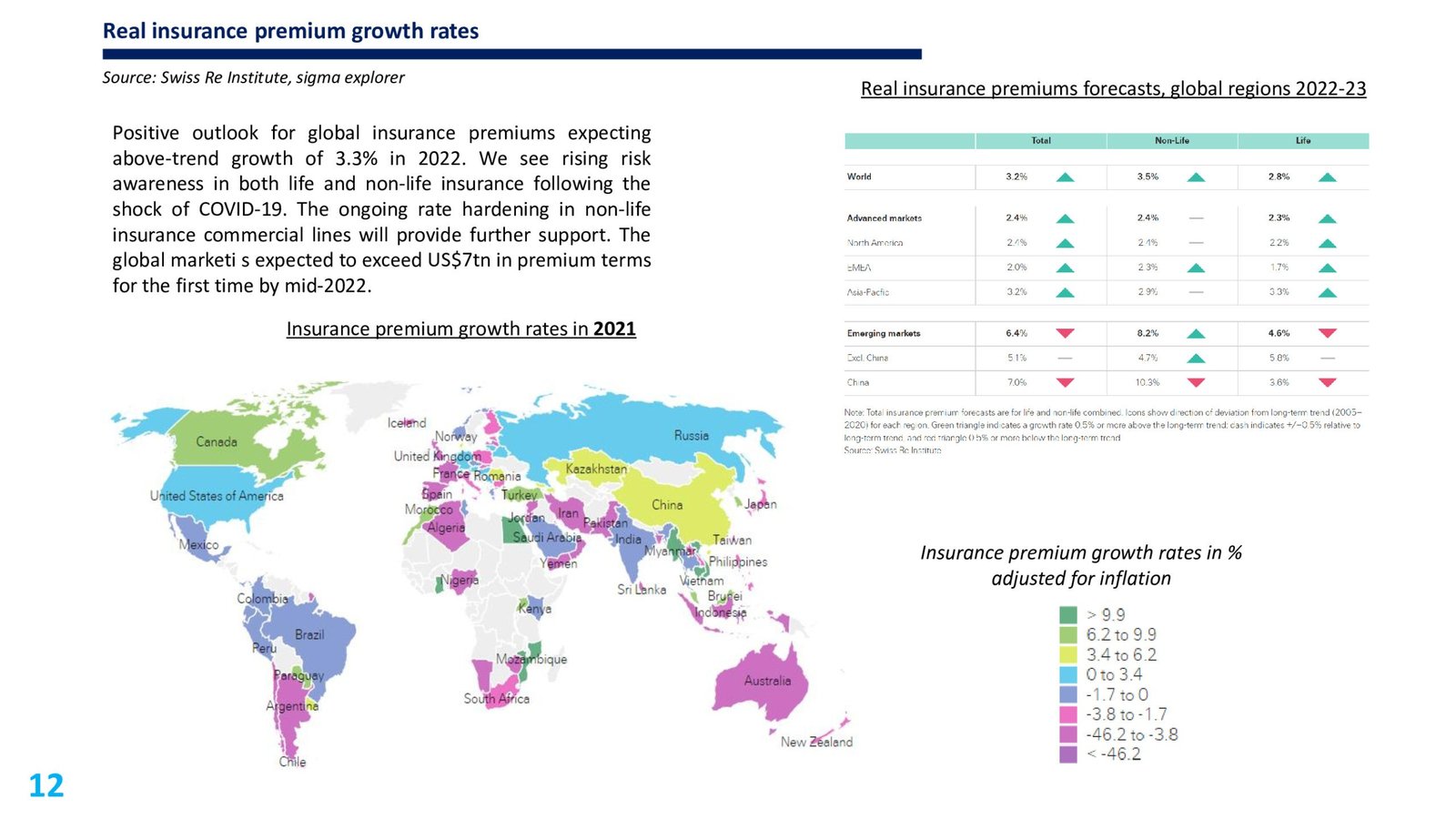
 Real growth rate of insurance premiums

Positive outlook for global insurance premiums: 3.3% growth is expected to outpace the trend in 2022. We are seeing increased risk awareness in both life and non-life insurance after the COVID-19 shock. Continued rate increases in commercial lines of insurance other than life insurance will provide additional support. The global market is expected to exceed $7 trillion in premium terms for the first time by mid-2022.

Market conditions suggest that positive pricing dynamics will continue across all lines of business and regions. The main drivers of the tightening market will be inflation-driven increases in payouts in all areas of business, continued social inflation, and persistently low interest rates.

Last year also taught us important lessons. The crisis once again demonstrated the usefulness of the reinsurance industry as a means of taking vital risks; awareness of climate risks increased because of extreme weather events, adding urgency to the race for net-zero emissions. We learned how much consumers welcome digital insurance, and we realized how growing inequality can exacerbate social inflation.

In 2016-2019, insurance premium growth averaged +50%. In 2020, a decrease of 6% due to COVID-19. In 2021, the volume of collected insurance premiums increased by 68.6%, the figure exceeds 3.7 trillion soums.)
b4916bec1b0bc10186defddd41750541 11 scaled 1

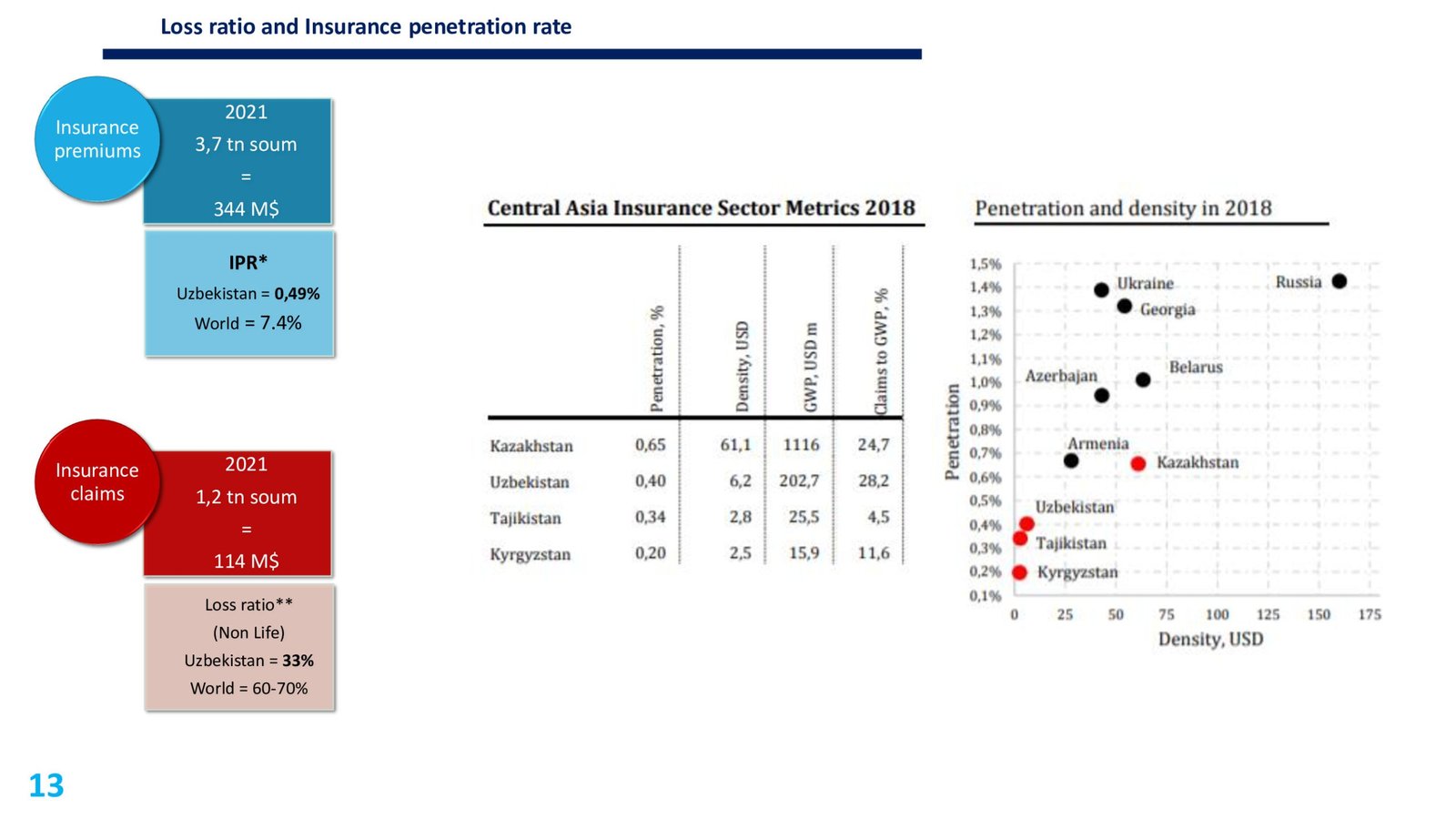
Loss ratio and insurance penetration

Insurance penetration in Uzbekistan is much lower than in other countries.

The volume of insurance premiums in 2021 reached $344 million, which is 0.49% of GDP. The global average IPR is about 7.3%. In Kazakhstan, the figure was as high as 0.7%.

The loss ratio of general insurance is 33%. In the world practice, this indicator averages 60-70%.
b4916bec1b0bc10186defddd41750541 12 scaled 1

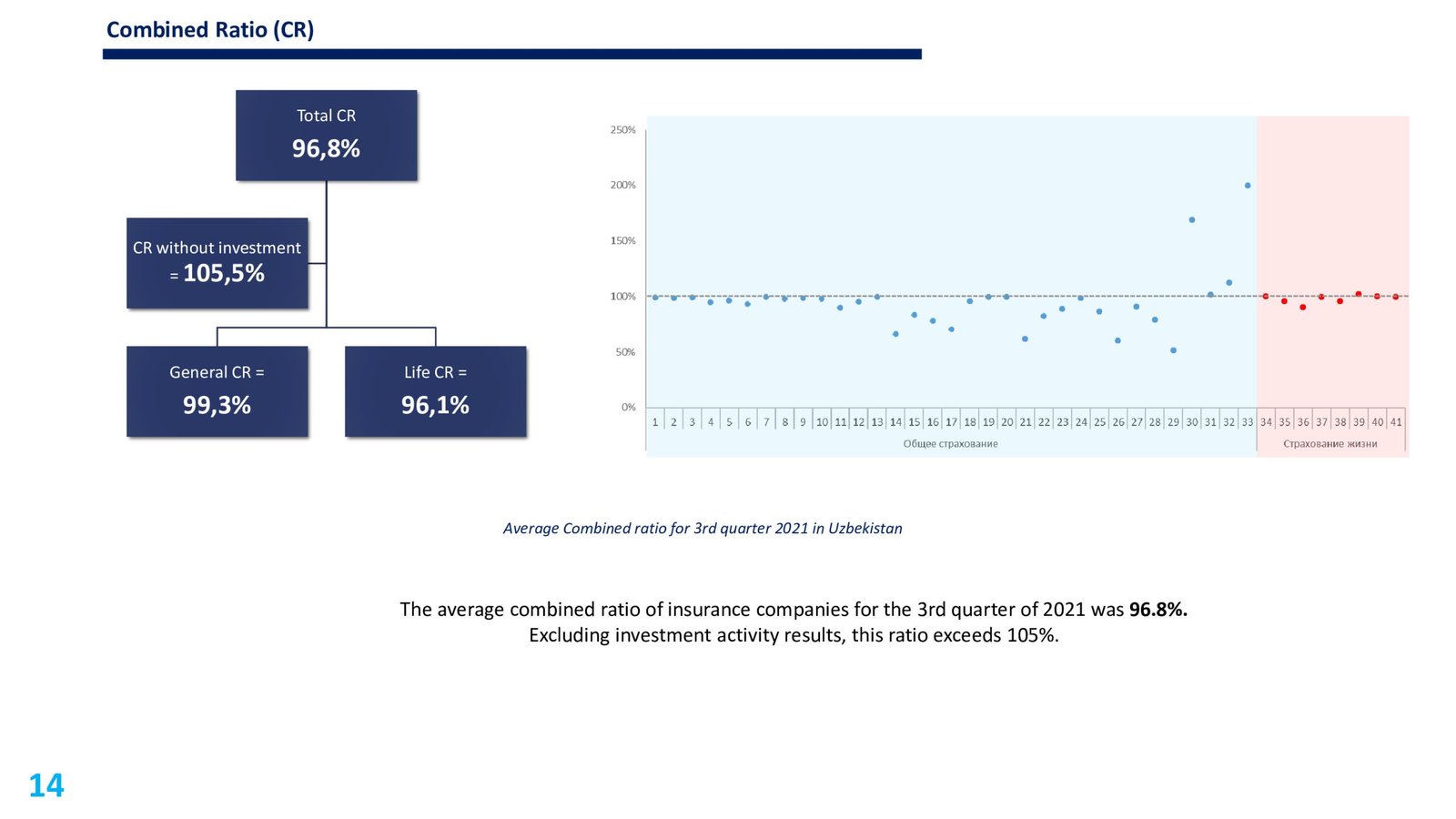
Combined ratio.

The average combined ratio of insurance companies for Q3 2021 was 96.8%.

Excluding results of investment activity this indicator exceeds 105%.
b4916bec1b0bc10186defddd41750541 13 scaled 1

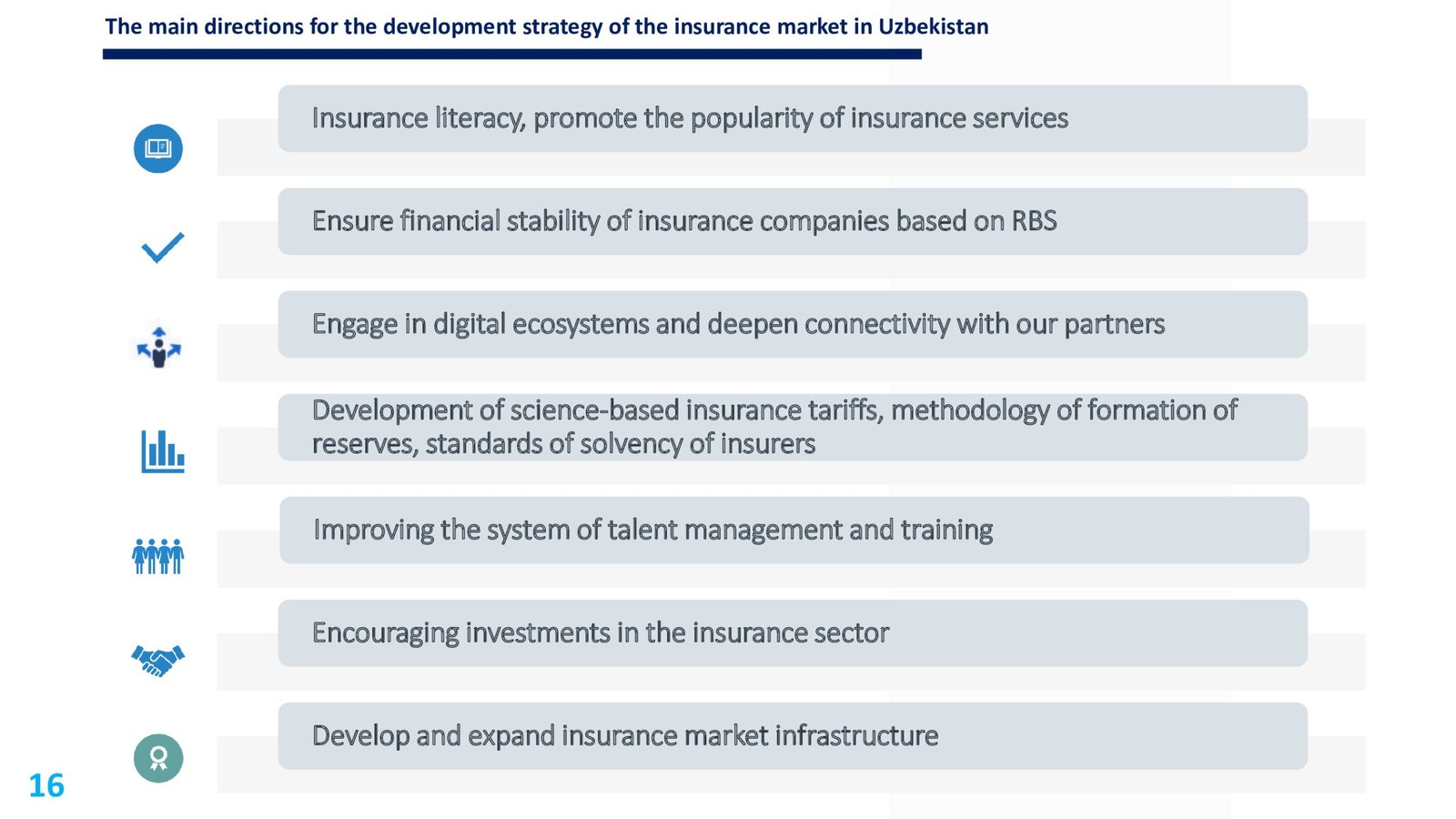
Main directions of insurance market development strategy in Uzbekistan

  1. Insurance literacy and popularization of insurance services
  2. Ensuring financial stability of insurance companies on the basis of risk-oriented management
  3. Participating in digital ecosystems and expanding opportunities to interact with our partners
  4. Development of scientifically grounded insurance tariffs, methods of forming reserves, norms of insurers’ solvency
  5. Improvement of talent management and training system
  6. Stimulation of investment in the insurance sector
  7. Development and expansion of the insurance market infrastructure
b4916bec1b0bc10186defddd41750541 15 scaled 1

The insurance market in Uzbekistan. Results of 2021

From 2016 to 2019, the annual growth of insurance premiums averaged 50%.

In 2020, a decrease of 6% compared to 2019 was due to the introduction of quarantine regulations, the lack of remote work of some companies, and a decrease in the income of the population during the quarantine period. In 2021, the volume of collected insurance premiums increased by 68.6% compared to 2020, the figure exceeded 3.7 trillion soums.

Premiums in the life insurance segment more than doubled (from 334.4 to 717 billion) at the end of the year. Such a sharp increase is explained by the recovery of the market after the 2020 pandemic. If compared with 2019, the growth was 22.3%. In the total premium portfolio, this area occupies about 19%, and in terms of insurance payments, life insurance is leading with 616.3 billion. This is slightly more than half of the total amount of insurance claims paid in Uzbekistan. The development of this segment is mainly due to voluntary insurance. By the Decree of the President of the Republic of Uzbekistan No. PP-5265, the announced tax benefits in the life insurance industry, both terms of the income tax of the insurance company and as well as personal income tax, allow to accelerate the development of long-term life insurance and will be aimed at expanding the list of services.

Voluntary general insurance is in the second position in terms of the growth rate of premiums. The premium volume increased 64.7%. The segment took 68% of the market (premium portfolio – 2.5 trillion). It accounts for more than a third of insurance claims payments (433.7 billion). The aviation industry in this segment ranks first in terms of growth in relative terms. Aircraft Insurance (Aviation Hull) collected 9.66 billion in premiums. The growth was 470.4%. As part of the liability insurance of air carriers to individuals and legal entities premium reached 1.5 billion (+487.8%).

The main direction of voluntary general insurance is credit insurance. Its share is 23.7% of all premiums in this segment. Over the past year, more than 600 billion sums were collected, which is 83.4% higher than it was a year earlier. In second place in terms of volume is the vehicle insurance (307.4 billion), and in third place is the total civil liability (207 billion).

General compulsory insurance took 13% of the market. The volume of premiums collected amounted to 476.7 billion. Almost half of this amount is taken up by civil liability insurance of vehicle owners – 229.12 billion (+30.6%). This is followed by the civil liability of the employer – 165.6 billion. This is 62.3% more than a year earlier. The top three are closed by construction and installation risks – 42.11 billion (+63.6%), thanks to active construction, even during the pandemic, the number of premiums for compulsory insurance of CAR/EAR continued to grow.

The opening of new insurance companies in the general insurance industry (5 insurance organizations, including 1 with 100% foreign capital – Azimuth Insurance Company) also influenced the growth of insurance premiums.

Investment activity has tripled from 2016 to 2020. At the same time, the size of deposits increased by 4.6 times, real estate by – 6.2 times, and loans – by 5.8 times. In 2021, the total volume of investments amounted to 3746.66 billion souls (+10.8%). In the total volume of investments, deposits account for 58.9% and growth in 2021 is +21.4%. Securities are in second place with 29.3% and growth of +14.3%. This is followed by real estate at 6.6% and a reduction of -13.3%.

Nevertheless, the growth of assets and equity of the insurance market could show much better results and this is hindered by three main problems of the insurance market:

  • High acquisition costs (commission fees) do not allow insurance companies to increase insurance reserves. From my point of view, this is due to the high corruption of the voluntary insurance market.
  • Extremely high level of cross-border reinsurance for voluntary insurance classes. On the one hand, problems in the field of reinsurance are associated with the partially uncontrolled withdrawal of funds abroad. On the other hand, with the restriction of reinsurance, the insurance companies’ insufficient capitalization and their inability to hold large risks affect.
  • Almost complete absence of competition in the insurance market in terms of banc assurance. Banks and financial and industrial groups have created subsidiary insurance companies, thereby excluding access to their clients by other insurance companies, pursuing exclusively their economic interests for the client to leave as much of his money as possible within their group. This is quite a sound and justified action if there is competition. When it is not there, it causes great harm to the qualitative development of the insurance sector.

The market is being influenced by the economic liberalization program. The reforms announced in August 2019 aim to strengthen the sector’s role in the economy and develop a new comprehensive regulatory framework. They also include measures to support premium growth, especially in retail segments and provide support or guarantee mechanisms in areas of strategic importance to the economy.

In particular, the development and implementation of a new version of the Law on Insurance Activities, the adoption of the Decree of the President of the Republic of Uzbekistan No. PP-5265 “On additional measures to digitalize the insurance market and the development of life insurance”, increased requirements for capitalization of insurance companies, significantly revised the principles of insurance mediation. We believe that all these measures will lead to long-term growth, reasonable concentration, and increased transparency of insurance companies as full-fledged players in the financial market of Uzbekistan.

The level of insurance penetration in Uzbekistan is much lower than in other countries.

The volume of insurance premiums in Uzbekistan relative to the country’s GDP is equal to 0.4% at the end of the year. The average global IPR is about 3%. However, this indicator is planned to increase in 2022 to 0.8%.

The loss ratio of general insurance is 31%. In world practice, this indicator averages 60-70%.

image 2021 11 19 10 48 01 1

Author

OYBEK N. KHALILOV

General Director of AIC, and concurrently, Chairman of the Board of the Association of Professional Participants of the Insurance Market of Uzbekistan.

Islamic Insurance – Takaful 

Takaful (Arabic: التكافل, sometimes translated as “solidarity” or mutual guarantee) is a type of Islamic insurance wherein members contribute money into a pool system to guarantee each other against loss or damage. Takaful-branded insurance is based on sharia or Islamic religious law, which explains how individuals are responsible to cooperate and protect one another. Takaful policies cover health, life, and general insurance needs.

Takaful insurance companies were introduced as an alternative to those in the commercial insurance industry, which are believed to go against Islamic restrictions on riba (interest), al-Maisie (gambling), and al-gharar (uncertainty) principles—all of which are outlawed in sharia. Like other Islamic finance products, Takaful is grounded in Islamic Muamalat (commercial and civil acts or dealings branch of Islamic law).

 Understanding Takaful

All parties or policyholders in a takaful arrangement agree to guarantee each other and make contributions to a pool or mutual fund instead of paying premiums. The pool of collected contributions creates the takaful fund. Each participant’s contribution is based on the type of coverage they require and their circumstances. A takaful contract specifies the nature of the risk and the length of the coverage, similar to that of a conventional insurance policy.

The takaful fund is managed and administered on behalf of the participants by a takaful operator, who charges an agreed-upon fee to cover costs. Much like a conventional insurance company, costs include sales and marketing, underwriting, and claims management.

Any claims made by participants are paid out of the takaful fund and any remaining surpluses, after making provisions for the likely cost of future claims and other reserves, belong to the participants in the fund—not the takaful operator. Those funds may be distributed to the participants as cash dividends or distributions, or via a reduction in future contributions. 

An Islamic insurance company operating a takaful fund must operate under the following principles:

  • It must operate according to Islamic cooperative principles.
  • A reinsurance commission may only be received from or paid out to Islamic insurance and reinsurance companies.
  • The insurance company must maintain two separate funds: a participant and policyholder fund, and a shareholder fund.

Special Considerations

According to Allied Market Research, the global takaful insurance market was valued at $24.85 billion in 2020 and is projected to reach $97.17 billion by 2030, growing at a CAGR of 14.6% from 2021 to 2030.

Since 60% of the global Muslim population is comprised of young Muslims—less than 25 years of age—this demographic can represent a sizeable customer base as their wealth grows over time.

Some of the largest names in the takaful market, according to a Research and Markets report, were believed to be the following:

  • Islamic Insurance Company
  • JamaPunji
  • AMAN
  • Salama
  • Standard Chartered
  • Takaful Brunei Darussalam Sdn Bhd
  • Allianz
  • Prudential BSN Takaful Berhad
  • Zurich Malaysia
  • Takaful Malaysia
  • Qatar Islamic Insurance Company.

Takaful vs. Conventional Insurance 

Most Islamic jurists conclude that conventional insurance is unacceptable in Islam because it does not conform with sharia for the following reasons:

  • Conventional insurance includes an element of al-ghararor uncertainty.
  • Conventional insurance is based on the concept and practice of charging interest. Islamic insurance, on the other hand, is based on tabarru, where a portion of the contributions made by participants is treated as a donation. This is why policyholders in takaful are usually referred to as participants.
  • Conventional insurance is considered a form of gambling.

Fiqh scholars

In its second session (December 1985),  the Fiqh Academy of the Organisation of Islamic Cooperation (also called the International Islamic Fiqh Academy) ruled conventional commercial (but not social insurance) insurance haram (forbidden). Its ninth resolution stated:

The commercial insurance contract, with a fixed insurance premium, as practiced by commercial insurance companies, contains substantial gharar, which renders the contract defective. Consequently, it is legally forbidden.

Travel insurance 

As a rule, we are forced to buy medical insurance when traveling, if it is included in the package of documents when obtaining a visa. But there is always a possibility that medical care may be needed abroad.

We will present you with two real cases.

The first case occurred in China, where the tourist did not have medical insurance.

“As a result of an accident on the street, I slipped and broke my leg. An ambulance was called and taken to the international hospital. The cost of transportation to the hospital (ambulance is paid), X-ray, doctor’s examination, anesthesia, crutches, and a tire cost $ 800. The cost of surgery on the kneecap was announced at $ 43,000. Naturally, she refused the operation. I had to urgently change plane tickets, economy class, to business, so that there was a possibility of transportation home”

Would the insurance company cover these costs if there was insurance? Definitely, yes. This is a classic accident. If a tourist would buy an insurance policy in Azimuth Insurance, she would have to pay only $ 26 at the exchange rate of the Central Bank of the Republic of Uzbekistan, while the insured amount would be $ 100,000.

What are we covering?

  • Outpatient and inpatient (emergency surgery only) treatment
  • Treatment from Covid 19
  • Emergency dental care
  • The return home of underage children left unattended
  • Medical evacuation
  • Search and rescue activities
  • Purchase of medicines according to prescriptions prescribed by a doctor
The second case happened during an excursion to a Buddhist temple known as the “Monkey Cave” in Thailand.

“On the way, the guide asked all tourists to take off all shiny objects, put away phones and cameras.

Later they explained to us that there were cases when primates tore off glasses, earrings, and chains from tourists stole personal belongings from bags. I didn’t believe it. Moreover, on the site near the temple, I was already surrounded by a cute family of macaques.

It took the primates a few seconds to attack the naive tourist.

A monkey with a calf under his arm sat down at my feet, tilted his head to one side, and held out his paw to me. While I was touched by this scene, a second monkey jumped on top of my shoulder. She bite my hand, which had a bag of nuts in it. I screamed in pain. The robber snatched the bag and they disappeared,” says the Tourist.

There was a small but deep wound on his arm. Local doctors provided the victim with the necessary assistance in accordance with a travel insurance policy: the bite site was treated, staples were applied, and vaccinated against rabies and other dangerous infections. Three days later, the tour ended and the tourist flew home in peace.

How to act if you need help?

  • Contact the Assistance Service by phone or using other means of communication specified in the Insurance Policy
  • If necessary, a doctor or ambulance can be sent to your hotel
  • If it is not possible to call the Assistance Service before being sent to the clinic, do it as soon as possible. It is necessary to report the incident to the Assistance Service before paying bills/expenses and present the policy to the medical staff.

Couldn’t contact the Assistance Service? You can pay the expenses yourself. In this case, upon arrival in Uzbekistan, upon submission of the relevant documents and receipts, the Company will reimburse all medical expenses (payment will be made in sums at the rate set by the Central Bank of the Republic of Uzbekistan).

Be healthy, and stay safe!

Contractors’ All Risks Insurance

Contractors’ all risks (CAR) insurance is a non-standard insurance policy that provides coverage for property damage and third-party injury or damage claims, the two primary types of risks on construction projects. Damage to property can include improper construction of structures, the damage that happens during a renovation, and damage to temporary work erected on-site. 

Third parties including subcontractors may also become injured while working at the construction site. CAR insurance not only covers those associated risks but also bridges these two types of risks into a common policy designed to cover the gap between exclusions that would otherwise exist if using separate policies.

CAR insurance coverage is common for such construction projects as buildings, water tanks, sewage treatment plans, flyovers, and airports.

KEY TAKEAWAYS

  • Contractors’ all risks (CAR) insurance is a non-standard insurance policy that provides coverage for property damage and third-party injury or damage claims, the two primary types of risks on construction projects.
  • Damage to property can include improper construction of structures, the damage that happens during a renovation and damage to temporary work erected on-site. 
  • Third parties, including subcontractors, may also become injured while working at the construction site.


Understanding Contractors’ All Risks (CAR) Insurance

Typically, both contractor and employer jointly take out CAR insurance policies, with other parties such as financing companies having the option of being named to the policy. Because multiple parties are included in the policy, they each retain the right to file a claim against the insurer, although all parties have the duty of informing the insurer of any injuries and damages that may result in a claim.

The goal of a CAR insurance policy is to ensure all parties are covered on a project, regardless of the type of damage to the property or who caused the damage. Insurers who underwrite this type of policy lose the right to subrogation, meaning that if it pays out funds to one party in the contract, it cannot seek to recover those funds from another party in the contract.

Special Considerations

CAR coverage may be extended to cover the interests of manufacturers, suppliers, contractors, and subcontractors. The policy can also be expanded to cover the following events:

  • Additional custom duty
  • Air freight
  • Damage to surrounding property
  • Debris removal
  • Earthquake
  • Escalation
  • Loss due to breakage of glass
  • Maintenance visits

Additionally, CAR policies may be designed to include losses incurred when start-up is delayed because of another insured loss. For example, if a structure is damaged and is covered by CAR insurance, then the losses incurred as a result of a delay in opening the property while the damage is being repaired may also be covered. CAR policies can also be expanded to include a provision for escalation, to cover acts of terrorism, and to cover excess third-party liability, among other less common scenarios.

Why do you need to insure your employees during business trips?

Why do you need to insure your employees during business trips?

Insurance is essential to avoid unexpected costs associated with the deterioration of your employees’ health while traveling.

Insurance can help in case your employees get health issues or injured during business trips abroad. The operator of the insurance company will find a doctor himself, arrange hospitalization or outpatient treatment. The costs of treatment, medicines and emergency return home are compensated by the insurance company.

Business Travel insurance is a protection against unforeseen expenses when traveling abroad. The general principle is as follows:

  • When insurance case occurs, the insured person should call the AIC’s service and describe the problem. We specify the phone number in the policy.
  • Our employee will accept the application, select a doctor or clinic and, if it’s necessary, arrange transportation. To confirm the payment, our employee will send letters of guarantee to the hospital and coordinate by phone.


With Azimuth Insurance you going to get protection against unforeseen expenses.

An insured event is a sudden health disorder that requires the provision of medical services within the scope, scope and conditions of provision provided for in the Insurance Program and entailed expenses caused by the Insured applying to a medical institution during the period of validity of the insurance contract or death of the Insured Person due to an accident.

The Insurer’s obligations for the implementation of the insurance payment / insurance coverage shall apply to insurance events that occurred during the insurance period and on the territory of the Policy.

What is included in the Business Travel Insurance? 

  • Emergency medical expenses, hospitalization, including COVID19
  • Emergency medical evacuation in case of serious illness or accident
  • Repatriation home in case of serious illness or accident  


TRAVEL ASSISTANCE SERVICES AND BENEFITS

  • Flight delay
  • Loss of baggage
  • Personal liability
  • Legal fees 


FREE SERVICE FOR AZIMUTH INSURANCE CLIENTS 

  • Delivery of medication
  • Urgent messaging
  • Long distance medical information service
  • Medical referral/appointment of a local medical specialist  
  • Connection services

InFrontier

lply8zf4sn1wkhbbffy8

InFrontier is a private equity fund based in London, authorized by the Financial Conduct Authority (FCA) and operating as a private equity company in frontier markets. 

“InFrontier aims to create commercial returns for investors while supporting socio-economic development in the world’s most challenging markets” says InFrontier founder Felix von Schubert.


InFrontier was founded in 2013 as a specialist emerging market investment company with a focus on Central and South Asia and investments across the region, including Azimuth Insurance Company (AIC) based in Uzbekistan.

The fund’s largest investor is the Commonwealth Development Corporation, the U.K. government’s international development fund. Other investors include: FMO Dutch Development Bank and DGGF Dutch High Growth Fund.

InFrontier has a strong team of specialists in London, Kabul, Tashkent and has investment activities throughout Central Asia. 

The team tirelessly researches local markets and carefully selects promising projects and startups, thus contributing to the growth and development of young companies.

The Fund aims to generate commercial returns by investing in market leaders that have the potential to shape entire sectors of the country’s economy.  Thanks to the extensive experience of managers and founders in various business sectors, the fund not only invests, but also shares knowledge and professional insider information.

Liability Insurance

The term liability insurance refers to an insurance product that provides an insured party with protection against claims resulting from injuries and damage to other people or property. Liability insurance policies cover any legal costs and payouts an insured party is responsible for if they are found legally liable. Intentional damage and contractual liabilities are generally not covered in liability insurance policies. Unlike other types of insurance, liability insurance policies pay third parties—not policyholders.

Key takeaway

  • Liability insurance provides protection against claims resulting from injuries and damage to people and/or property.
  • Liability insurance covers legal costs and payouts for which the insured party would be found liable.
  • Provisions not covered include Intentional damage, contractual liabilities, and criminal prosecution.
  • Liability insurance is often required for automotive insurance policies, product manufacturers, and anyone who practices medicine or law.
  • Personal liability, workers’ compensation, and commercial liability are types of liability insurance.


How Liability Insurance works:

Liability insurance is critical for those who are liable and at fault for injuries sustained by other people or in the event that the insured party damages someone else’s property. As such, liability insurance is also called third-party insurance. Liability insurance does not cover intentional or criminal acts even if the insured party is found legally responsible. Policies are taken out by anyone who owns a business, drives a car, practices medicine or law—basically anyone who can be sued for damages and/or injuries. Policies protect both the insured and third parties who may be injured as a result of the policyholder’s unintentional negligence.

Claims-Made vs. Occurrence Policy

When you get business insurance, you’ll choose from either a claims-made or occurrence policy. What’s the difference between a claims-made vs. occurrence policy? Well first, know that it directly affects the kind of coverage you have, so it’s important to know how they work.

Claims-Made Policy?

Insurance companies commonly write policies on a claims-made form. This means your insurer helps cover claims filed during your policy period.

There are two features of a claims-made policy that can affect coverage:

Retroactive date: Your policy provides coverage if an incident occurs on or after a specified date. Let’s say you have professional liability insurance written on a claims-made policy. Your coverage starts in January 2021 and has a November 2019 retroactive date. If your client sues you in February 2021 for an event that occurred in December 2019, your insurer can help cover the claim because it happened after your retroactive date and the claim got reported during your policy period.

Extended reporting periodThis helps cover claims made during a specified time after your policy expires. Generally, it lasts between 30 and 60 days. So, if your policy expires in December 2021 and you have a 60-day extended reporting period, your insurer can help cover claims reported in this window. This is also known as tail coverage.

It’s important to remember that a claims-made policy covers your business only if the claim is:

  • Filed during your policy period or within your extended reporting period
  • For a loss occurring on or after your retroactive date


For losses or incidents that happened before your policy started, your insurance company won’t provide coverage. Instead, you’ll need prior acts coverage to help with these kinds of claims. With prior acts coverage and tail coverage, you may have more peace of mind since your business will have more protection.

Occurrence Insurance Policy?

An occurrence policy provides coverage for incidents that happen during your policy period, regardless of when you file a claim. These policies can be more expensive than a claims-made policy because of how long coverage applies.

Let’s say your business has commercial general liability insurance coverage written on an occurrence form. During your policy period, your customer breaks their arm after a slip and fall in your business. However, they don’t report the incident until a year after your policy expires. Because they got hurt while your policy was in effect, the claim can still get coverage. 

Types of Liability Insurance:

Business owners are exposed to a range of liabilities, any of which can subject their assets to substantial claims. All business owners need to have an asset protection plan in place that’s built around available liability insurance coverage.

The main types of liability insurance are:

  • General Liability


General Liability Insurance is the kind of coverage that provides an individual with protection against variety of claims which may include bodily injuries, physical damage to car, property damage etc arising from business operations. 

  • Employers’ Liability
    required by lawif you have employees – covers the cost of compensating employees who are injured at or become ill through work
  • Public Liability
    covers the cost of claims made by members of the public for incidents that occur in connection with your business activities
  • Product Liability
    covers the cost of compensating anyone who is injured by a faulty product that your business designs, manufactures or supplies
  • Professional Indemnity
    covers the cost of compensating clients for loss or damage resulting from services or advice provided by a business or individual
  • Directors’ and Officers’ Liability
    covers the cost of compensation claims made against your business’s directors and officers for alleged wrongful acts