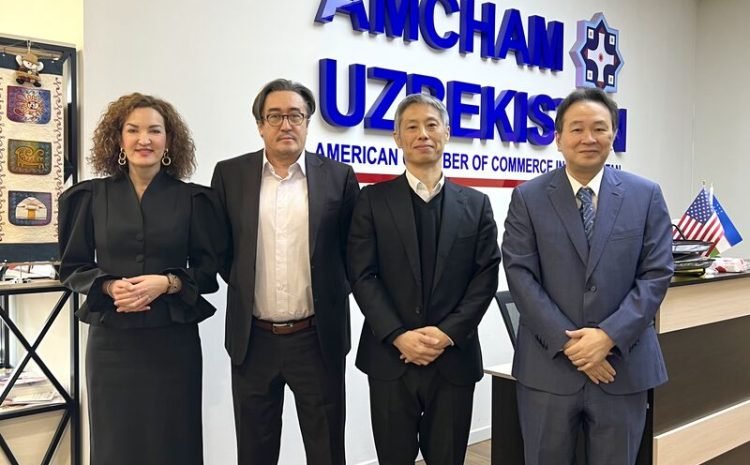
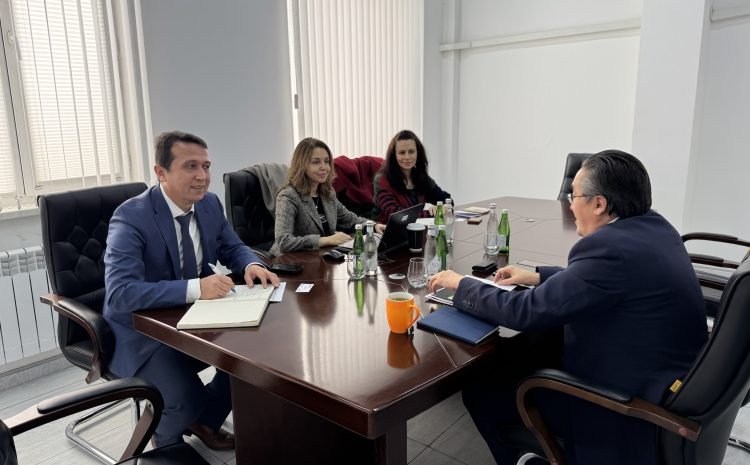
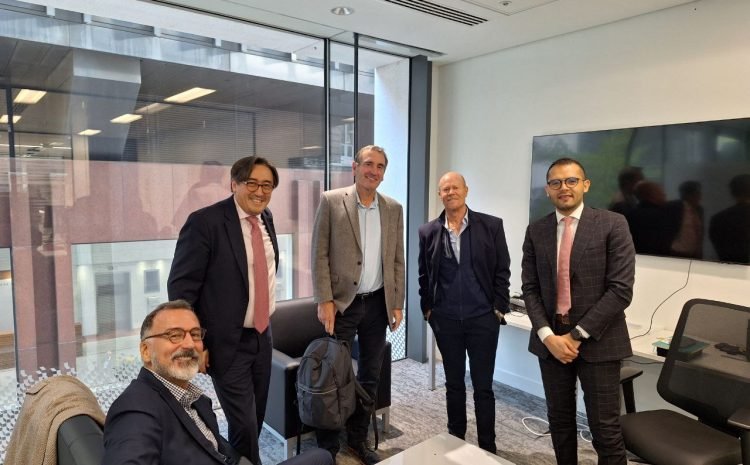
On March 5, Oybek Khalilov, President of AmCham Uzbekistan and CEO of Mosaic Insurance Group, along with Tatyana Bystrushkina, Executive Director of AmCham Uzbekistan, held a productive meeting with Chairman Hiroyoshi Kainuma and Vice Chairman Akira Ito.
The discussion focused on organizing a business networking event to connect American, Japanese, and Korean companies in Uzbekistan. This initiative aims to foster synergies, exchange best practices, and enhance policy dialogue, strengthening international collaboration and investment in the region.
Mosaic Insurance Group is committed to supporting initiatives that foster economic growth and international collaboration, with the active participation of our CEO, Oybek Nosirovich Khalilov.
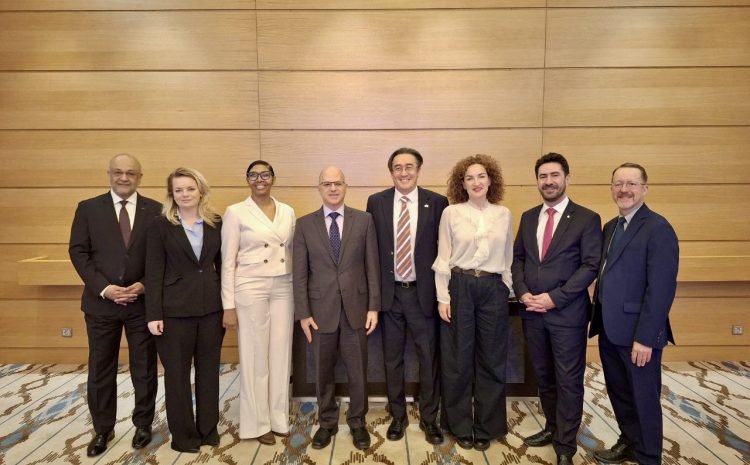
Discussions focused on enhancing the business climate, fostering investment opportunities, and strengthening USA-Uzbekistan economic relations. These high-level engagements play a crucial role in shaping policies that benefit both local and international businesses operating in Uzbekistan.
A big thank you to our Embassy partners and AmCham Board members for their valuable insights and commitment to driving economic growth!
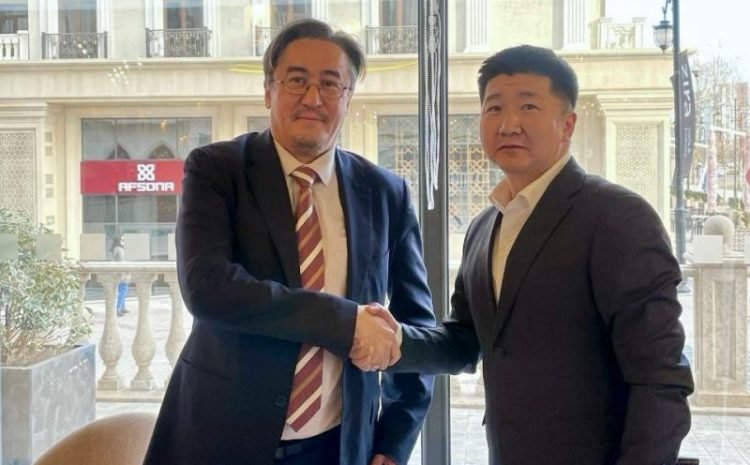
The Insurance Association of Uzbekistan and the Mongolian Insurance Market Association have officially signed an MOU by Mr. Oybek Khalilov, paving the way for a structured, long-term collaboration between two dynamic and evolving insurance sectors. More than just a formal agreement, this initiative represents a strategic alignment of industry best practices, regulatory advancements, and market development efforts.
Key Elements of the Agreement: Information Exchange – Creating a seamless channel for sharing insights on regulatory frameworks, underwriting methodologies, and risk assessment trends. Joint Training & Development – Designing specialized educational programs to enhance actuarial expertise, reinsurance strategies, and claims management. Market Insights & Research – Conducting joint studies on industry trends, product innovation, and consumer needs to drive market-driven policy improvements. Annual Performance Review – Both associations will assess achievements and set future goals within the first quarter of each year, ensuring an adaptive and result-oriented approach.
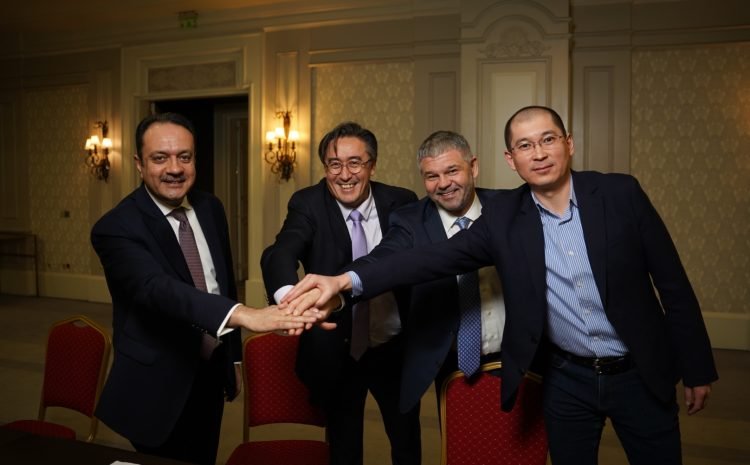
The signing of the Memorandum of Understanding (MoU) by AmCham leaders from Kazakhstan, Kyrgyzstan, Tajikistan, and Uzbekistan represents a pivotal moment in the economic evolution of Central Asia. This landmark initiative goes beyond a symbolic agreement—it lays the foundation for a structured, institutionalized business framework that will shape cross-border investment, trade policies, and corporate governance in the region for years to come.
Why This MoU Matters
Institutionalization of the Regional AmCham Network 2.0
Historically, business chambers in Central Asia have operated independently, often facing challenges in synchronizing their efforts across borders. By adopting a regional model inspired by AmCham EU, AmCham Middle East, and the Asia Pacific Council of AmChams, this initiative will standardize economic policies, investment incentives, and corporate advocacy—leading to a harmonized business environment.
New Era of Cross-Border Investment: The MoU sets a precedent for businesses expanding beyond national markets—reducing bureaucratic hurdles and enhancing legal transparency for foreign direct investments (FDI). Sector-Specific Coordination: By aligning industry best practices, particularly in insurance, energy, finance, and technology, the initiative fosters a regional economic bloc with increased global competitiveness.
2. Architecting a Unified Business Vision: Strengthening Regional Cooperation
The AmCham Central Asia initiative is a strategic step toward fostering a more integrated and resilient business environment across the region. By enhancing cooperation among AmCham chapters, this initiative aims to create a more attractive landscape for global investors and businesses.
🔹 Insurance & Risk Management for Mega-Projects A key component of regional economic growth is ensuring that large-scale projects in construction, energy, and infrastructure have access to robust risk management and reinsurance solutions. Strengthening these mechanisms enhances financial security, encourages foreign direct investment, and supports long-term project sustainability.
🔹 Policy Advocacy for International Standards Aligning regulatory frameworks with international best practices, such as Solvency II principles, contributes to a more predictable and transparent business environment. By promoting risk-based capital requirements and regulatory consistency, this approach enhances investor confidence and facilitates smoother cross-border economic collaboration.
Through collective action and strategic alignment, AmCham leaders are working toward a more connected and investment-friendly Central Asia, fostering regional stability and long-term economic growth.
Key Policy Areas Addressed: Future-Proofing Central Asia’s Economy
Beyond traditional business networking, the MoU sets a precedent for deep institutional reforms in several critical areas:
✔️ ESG (Environmental, Social, and Governance) Standards – Introducing sustainable investment criteria into cross-border projects to align with global corporate responsibility trends. ✔️ Cybersecurity & Digital Economy – Tackling data protection and cross-border cybersecurity concerns to facilitate the safe expansion of digital financial services. ✔️ FDI & Trade Policy Harmonization – Creating a regional investment roadmap that standardizes tax incentives, legal protections, and trade dispute resolutions.
U.S. & European Engagement: Strengthening Global Economic Linkages
The MoU is not just about Central Asia—it aligns with broader U.S.-Central Asia trade relations and Europe’s growing interest in the region.
Connecting with AmCham EU & the U.S. Business Community: Central Asian AmChams can now collaborate with multinational corporations (MNCs) through structured engagement programs. B5+1 Initiative Integration: This initiative strengthens regional economic diplomacy by creating a unified voice for Central Asia in high-level negotiations with the United States. The Road Ahead: Turning Strategy into Execution The real test of this MoU will be implementation. The success of this initiative depends on:
🔹 Creating measurable KPIs (Key Performance Indicators) for cross-border projects 🔹 Building a centralized AmCham data platform to track business expansion trends 🔹 Launching a permanent regional AmCham office for operational efficiency 🔹 Securing funding from international financial institutions (IFIs) to support long-term projects
This is just the beginning. Central Asia is no longer just an emerging market— the region is well-positioned to unlock its full economic potential.
Today, as part of the visit by the World Bank and International Finance Corporation (IFC) delegation, led by Katerina Levitanskaya, we had a productive meeting with Oybek Khalilov, CEO of Mosaic Insurance Group.
During the meeting, we discussed critical issues related to private sector development, improving the investment climate, and addressing barriers to attracting private investments in Uzbekistan. Special attention was given to opportunities for collaboration in insurance, enhancing the investment appeal of specific economic sectors, and joint efforts to foster sustainable growth.
We are confident that the collaboration between government authorities, the private sector, and international organizations such as the World Bank and IFC will lay the foundation for impactful initiatives aimed at improving the business environment and creating new opportunities for businesses.
The recent wildfires in Los Angeles are putting California’s efforts to stabilize its home insurance market to the test. As wildfire risks escalate, many insurers have withdrawn from the state, making coverage increasingly expensive and difficult to obtain.
State Farm’s recent departure, which reduced coverage in Pacific Palisades by 70%, underscores the growing crisis. Homeowners unable to secure traditional insurance must turn to the FAIR Plan—a state-backed program designed as a last resort for those who cannot obtain private market coverage. These policies are typically more expensive and provide less coverage than commercial plans. With FAIR Plan enrollments surging, concerns about its ability to cover claims are rising, though officials assert the program remains solvent with $2.5 billion in reinsurance.
New state regulations now permit insurers to factor climate change into premium calculations and pass reinsurance costs onto consumers. While these measures have encouraged some insurers to re-enter the market, critics warn they could also lead to steep rate increases.
While government agencies have yet to release preliminary damage estimates, AccuWeather projects first estimate damages and economic losses from the wildfires could reach $250 billion to $275 billion.
Experts predict rising insurance premiums in the wake of the fires, but the broader impact on California’s insurance market remains uncertain. The state’s new policies aim to balance affordability with industry sustainability, yet homeowners in high-risk areas may continue to face challenges securing coverage.
The challenges facing California’s insurance market highlight a global trend: climate change-driven catastrophes are reshaping risk assessment and underwriting strategies. Uzbekistan, while not prone to wildfires, faces its own climate-related challenges, including extreme weather events and infrastructure risks.
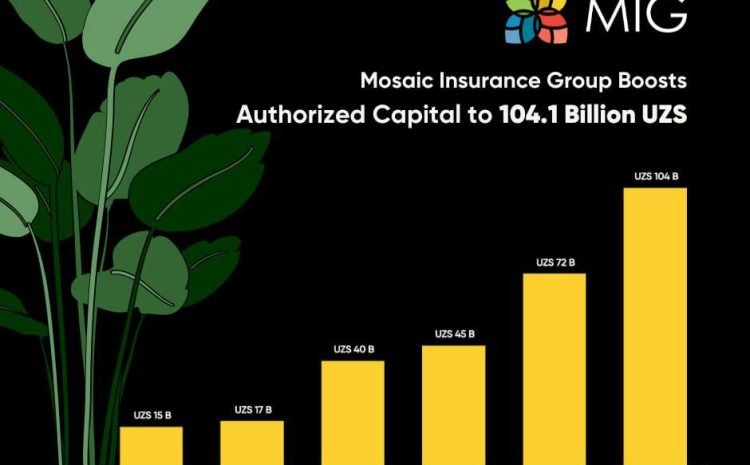
We are pleased to announce that Mosaic Insurance Group has officially increased its authorized capital to 104 billion UZS.
This significant milestone reflects our commitment to strengthening our financial position and enhancing our ability to deliver exceptional services to our clients and partners. The increased capital will enable us to support larger risks, expand our offerings, and drive sustainable growth in the years ahead.
We extend our gratitude to our stakeholders for their continued trust and support as we advance towards our vision of becoming the leading insurance provider in Central Asia
Nozima Khashimova, Commercial Lines Underwriter at Mosaic Insurance Group, reflects on her five years in insurance, specializing in foreign inward risks. Despite being a young company, Mosaic has become a trusted reinsurer locally and internationally, partnering with top brokers like AON, UIB, and WILLIS.
With reinsurance premiums rising from $620,000 in 2023 to $1 million by mid-2024, Mosaic’s growth is driven by strategic partnerships in Southeast Asia, Eastern Europe, and Latin America. Armed with a new Moody’s rating, the company plans to expand into Australia and Africa. Recently awarded the CII certificate, Nozima credits Mosaic’s strong support for her development, contributing to its global ambitions.
Behzod Rakhmatullaev shares his impressive professional journey in the insurance industry, highlighting key milestones in his career, including aviation insurance, motor insurance, and his deep specialization in managing insurance portfolios at Mosaic Insurance Group.
We are excited to share the outcomes of a fruitful meeting between Mr. Oybek Nosirovich Khalilov , CEO of Mosaic Insurance Group, and Steve Jackson, Chief Commercial Officer at XS Global. This discussion opened doors to potential collaborations, blending Mosaic’s expertise in Central Asia with XS Global’s strong presence in Latin America.
XS Global, a leading regional MGA and Lloyd’s Coverholder, has grown significantly since its inception in 2015. With a focus on deploying targeted reinsurance capacity and a proven track record for profitable underwriting, XS Global continues to set benchmarks in the (re)insurance market.