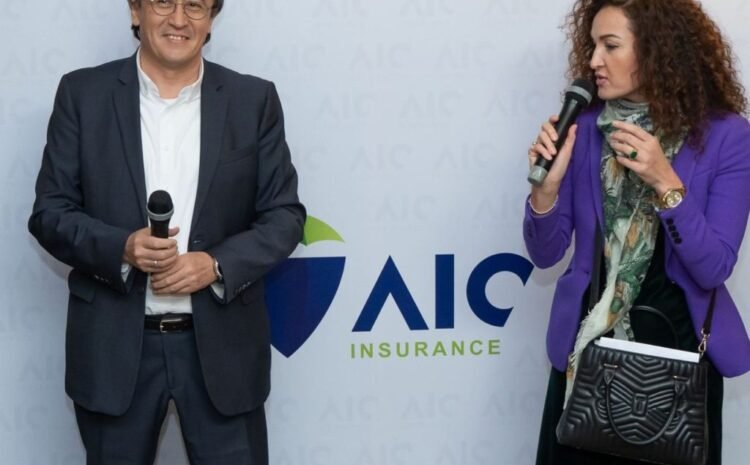
Interviewer: Could you provide information about this year’s Insurance forum?
Oybek Khalilov: First of all, yes, very glad to say it is a successful year, for us to be sponsoring this forum. The forum which initially started as purely insurance forum, for last two years combined banking sector as well. It was important because of financial risks, this type of insurance was not known in Uzbekistan, and it’s started to develop recently. For us as an insurance company, we decided not to run in the classical type of insurance competition with the others rather to create a niche for ourselves, at the same time helping all the corporates to cover those risks which are well known and provided outside Uzbekistan.
So the first year we have sponsored it was in fact a coverage related mainly to the banks. And it is also very useful for us because it is the first year when we are trying to grow our portfolio significantly in financial lines of business.
Interviewer: Could you give us brief description of what is financial lines insurance?
Oybek Khalilov: First of all, financial lines stands for insurance products which cover the financial losses and costs associated, losses not related to other personal property damages. Usually financial lines insurances will include the risks like directors and officers liability, cyber claims, and bankers blanket bonds.
Interviewer: What is D&O insurance? Why D&O insurance is important for corporates?
Oybek Khalilov: D&O is a well-known concept globally in the insurance market. Most of the countries the leaders, the managers, the directors and officer, the “C” level officers, they wouldn’t even take the job if they don’t have an insurance. Basically this covers the risks of the related to the financial losses and risks brought by the third parties against the decisions made by directors and officers of the company. It is essential to have this policy not only for the good governance purpose but also it helps to improve the management decisions, the managers don’t have to be afraid of huge financial burden on their personal accounts if they make a wrong decisions.
Interviewer: What is the advantage of Azimuth Insurance in terms of financial lines insurance? Why people should choose AIC over other insurance companies?
Oybek Khalilov: First of all, we are the first local insurance who is underwriting D&O policy, the other Uzbekistan insurance companies; they used to write D&O, not themselves but representing large international players. So they do not write the business themselves, they just front it. We have our own experts, we are building our expertise of course, we are young in that area as well, but we are doing it ourselves. So we have our own professional experts and we are building our own statistics and database and we are trying to analyze those risks which are covered. The current environment in Uzbekistan is very unique for Uzbekistan itself, so we cannot just take the products and even though I am for 22 years used to work in AIG, and AIG is one of the main leaders in financial lines. So what they are doing also is they teaching us and helping my colleagues to understand better the financial lines risks, so we are educating our own staff and creating capacity locally in order to provide this insurance and write, in insurance world it means underwriting. We have to underwrite it in here in Uzbekistan. Previously all insurance companies haven’t done any underwriting it was done abroad.
Interviewer: What is D&O insurance? Could you further explain why it is important?
Oybek Khalilov: The Law of RU “On Joint-Stock Companies and protection of shareholders’ rights” clearly states that the manager bears personal responsibility for the decisions he makes. That is, if as a result of his erroneous or negligent actions damages the interests of third parties, he may be sued or claim from the company, shareholders, employees, creditors, customers, the regulator and another third person may appear.
D&O insurance policies offer third-party liability cover for company managers to protect them from claims which may arise from the decisions and actions taken within the scope of their regular duties.
And the cause of the claim can be any mistaken decision in the management of the company, starting with errors, inaccuracies in the financial statements, prospectuses; Non-observance of the procedure for conducting major transactions, incorrect disclosure of the stated material facts, incorrect evaluation of investments and transactions; intended misuse of information or copyright, etc.
D&O policies cover the personal liability of the company directors and officers as individuals (Side A cover), but also the reimbursement of the insured company in case it has paid the claim of a third party on behalf of its managers in order to protect them (Side B or Company Reimbursement Cover). Listed stock companies can also obtain cover for claims against the company itself for a wrongful act in connection with the trading of its securities (Side C or Securities Entity Cover).
Interviewer: How does the D&O insurance work? Could you explain further with some example?
Oybek Khalilov: In order to better understand the essence of D&O insurance, we give an example of how a policy works in a specific situation, often encountered in practice: A shareholder who acquired 30% of the shares of the joint stock company sent a public offer to the other shareholders for the acquisition of their shares (mandatory offer). Simultaneously with this offer, the Board of Directors sent its shareholders recommendations, developed without taking into account the opinion of the independent auditor. The minority shareholder accepted the mandatory offer based on the information received from the board of directors, and sold the securities. Subsequently it was found out that the cost of selling these shares was significantly less than the market value, as a result of which the shareholder filed a lawsuit against the members of the board of directors to recover damages caused to him. The court made a decision to recover damages in favor of the plaintiff in the amount of the difference between the acquisition price and market value.
Another example of an insurance event was a Russian company listing in the US, became a subject of an antimonopoly investigation in Russia, which caused a significant drop in the rate of its shares. American shareholders (mainly funds) recorded losses and despite the fact that the original reason was already settled in Russia, filed lawsuits against the directors of the Russian company for incomplete disclosure of information. The Russian issuer was forced to spend almost three years in the US court, and despite the fact that the claim was rejected as a result, he incurred about $ 2 million in defense costs. The client was fully justified – he did not have to pay a refund. Nevertheless, the insurance company paid the costs of protecting its client, who at one time safely insured its financial risks by buying an international policy D&O.
Common D&O risk scenarios are:
- Employment Practices & HR issues
- Shareholder actions
- Reporting errors
- Inaccurate or inadequate disclosure
- Misrepresentation in a prospectus
- Decisions exceeding the authority granted to a company officer
- Investigations into compliance with regulations or laws
Interviewer: So that means the D&O insurance cover legal costs arising from the incident?
Oybek Khalilov: From the examples we see that, despite the fact that the policy is called liability insurance, in fact it is insurance of expenses that the client can incur as a result of bringing a suit to him. So often it turns out that the costs of lawyers and the conduct of cases in court exceed the reparation itself, which was determined by a court decision. At the same time, it is worth noting that the policy covers not only the costs of reimbursement of damages, but also other expenses that may arise in the insured person during the consideration of charges brought against him for criminal and administrative violations in court, these are the costs of the investigation, Expenses for reputation restoration and other emergency expenses.
Interviewer: The law says the manager bears personal responsibility for the decisions he makes. So what are the risks faced by the management of the corporation?
Oybek Khalilov: It should also be noted that the risk of the CEO of the company increases due to the fact that he is potentially responsible for any actions or omissions of the company. Even if he himself did not personally participate in the decision (and / or did not know about it) and the corresponding actions or inactions were committed by other officials or employees of the company, the risk lies with the leader by default.
The risks faced by members of the boards of directors and boards are constantly growing. Risks arise in the course of the daily activities of the company. And in order to reduce the negative consequences of negligence or negligence of management and make up for financial losses in case of incorrect decisions, the protection instrument comes into force as D&O policy.
Interviewer: How did D&O insurance come to popularity? What are the international practices?
Oybek Khalilov: If you go deeper into history, back in the 30s of the last century the leaders of big business thought about the risks associated with their personal responsibility. During the Great Depression of the 30s two important legislative acts were adopted in the USA: the Securities Act of 1933 and the Investment Law of 1934, which established personal responsibility of directors for wrong actions, and companies had no right to compensate losses to their directors. So the market was offered a unique product to protect the personal financial interests of directors. And although insurance did not gain wide popularity, the need for insurance was recalled a little later.
In 1940-1950-ies in the United States, a number of laws were passed allowing corporations to enter into agreements with their directors to compensate them for damages. Such agreements began to reflect in the financial statements as additional obligations, and the companies began to seek the possibility in any way to remove this risk. The insurers remembered the almost forgotten product “Protection of personal finances”, slightly upgraded it and offered the market D&O liability insurance policy.
Since the mid-50s the number of D&O policies in the US is steadily growing. If in 1965 this policy was acquired by 10% of large corporations, then in the 1970s, the number of its customers has grown to 70-80%. Following the United States, European companies are actively starting to buy this insurance. To date, in the West, almost 100% of public companies have protection under the D&O policy.
Interviewer: In your opinion, what risk factors are faced by directors on Uzbekistan?
Oybek Khalilov: Returning to Uzbekistan, it should be said that there were cases of claims against the directors, but no official information, whether these losses were reimbursed. In Uzbekistan, unfortunately, there is legal illiteracy of leading employees. But, ignorance of the legislation does not absolve anyone from responsibility. To date, in our country, the practice of presenting a claim specifically to an official, and not to the company itself, has not yet developed, but it is obvious that raising the standards of information disclosure by issuers in Uzbekistan will inevitably lead to an increase in the level of risk of managers’ liability.
I want to think positively and believe that Uzbekistan will nevertheless fit into the global insurance practice with clear criteria and requirements for managers that will allow them to be held accountable for their wrong actions, which will undoubtedly affect the quality of corporate governance in companies and on the economic system of Uzbekistan as a whole.
Interviewer: What is not covered?
Oybek Khalilov: A D&O policy does not cover fraudulent, criminal or intentional non-compliant acts. Nevertheless, innocent directors remain fully covered if they are co-defendants, even if the acts of their colleagues were intentional and fraudulent.
D&O will also not cover cases where directors obtained illegal remuneration, or acted for personal profit. All activities which are covered by another insurance policy, such as Professional Indemnity, are either excluded in D&O policy or the D&O cover is only provided after erosion of that other policy.
Other common D&O exclusions are: Property damage and bodily injury; Legal action already taken when the policy begins; Claims made under a previous policy; Claims brought by one insured against another insured; Claims alleging Environmental damage.
Interviewer: Does D&O insurance encourage managers to behave negligently?
Oybek Khalilov: No. D&O is not a blank check for bad behavior. This frequently made assertion is not specific to D&O but rather has to do with the basic issue of liability cover, and yet opinion leaders who demand that managers should “get what they deserve” eclipse the real facts: no amount of research can show that managers behave any less responsibly when insured by a D&O policy.
The opposite is true. The process of a public lawsuit and financial losses, the possibility of corporate and personal reputational losses and all the other pains that accompany a claim made against a manager are a major deterrent. A D&O policy does not automatically cover all these losses, as they are quite complex and largely outside its scope.
Furthermore, D&O insurance enables the insurance industry and regulators to collect objective data about acts that lead to claims and to better monitor these trends.
Limits and personal deductibles allow insurers to adjust their policies to individual persons or companies as well, leading to better corporate governance.
In an environment of ever-tightening management liability regulations, D&O cover therefore provides an essential tool for both steering good business practice and handling the growing risks directors and officers face.
Interviewer: What other protections does Financial lines products offer?
Oybek Khalilov: Bankers Blanket Bond (BBB)
Operational Risk Transfer Programmes
Operational risk is the risk of direct or indirect loss resulting from inadequate or failed internal processes, people and systems or from external events. Operational risks and losses can result from fraud, employee errors, failure to properly document transactions or to obtain proper internal authorization, failure to comply with regulatory requirements and conduct of business rules, equipment failures, natural disasters, acts of third parties or the failure of external systems.
The practice of risk transfer through insurance products is well established and documented in developed market. The development of Operational Risk Management practice and Mechanism to transfer and mitigate risk within the banking sector forms good corporate governance and better depositors value Protection.
As a good corporate governance practice, board of directors should be well aware of their institution’s operational risk profile and they should make prudent decision on overall operational risk management policies and procedures that are in the interest of all the stakeholders of their institution.
Interviewer: What is Bankers Blanket Bond Insurance?
Oybek Khalilov: A: “BBB” Insurance attempts to provide, under one insurance contract, coverage for money, negotiable, funds and other valuable property against CRIME RISKS such as theft (by employees or other parties), robbery, burglary.
- The crime policy is designed to operate on a “losses discovered” basis.
- This means that coverage is triggered when the Insured (or if a raised escalation procedure is in place, a “Responsible Officer”) discovers a loss.
- The loss must have been discovered during the policy period.
- If no retroactive date has been applied, the act or event leading to that loss could have been committed or occurred at any time.
- The crime policy will be subject to a limit of indemnity (which applies in excess of deductible or retention). The limit of indemnity will be on an “aggregate” basis.
How it happens?
- Expenses Schemes – This is where the perpetrator of the fraud either misclassifies, overstates or claims fictitious expenses
- Employee embezzlement – Diversion of funds, assets or stock from the organisation’s accounts, either in the form of cash or by the raiding of bank accounts
- Hold ups – Robbery by force or threat of force
- Stock & physical assets – Stock manipulation fraud, i.e.misuse or misappropriation of company property, or simply the theft of a vehicle, stock or supplies or computer equipment
- Payroll Fraud – These are similar to procurement frauds in as much as the fraudster is instrumental in having the company pay for work that has not been performed
- Loans
- Skimming – Diversion of Funds belonging to a company, prior to the recording of such funds in the company’s accounts. (e.g. customers payment directly into the hands of a company’s employee)
- Cheque/bank transfer tampering – Frauds perpetrated by persons having access to the company’s cheque books or electronic payment or bank systems. These frauds involve forged signatures and transfer approvals, altering of payee details, or payments into a new account opened by the perpetrator of the fraud but in the same name of a genuine payee
- False invoices – Where employees work with co-operative suppliers and enter into arrangements of excessive payments of goods or services purchased for the company in return for kickbacks. Thereafter the employee makes mistakes or overpays and then requests the recipient amend the error with a refund cheque which is then diverted
Interviewer: What other types of Crime can be covered by financial lines insurance?
Oybek Khalilov: Cyber Insurance Solution
The infrastructure, the users, and the services offered on computer networks today are all subject to a wide variety of risks posed by threats that include distributed denial of service attacks, intrusions of various kinds, eavesdropping, hacking, phishing, worms, viruses, spams, etc.
Cyber-attacks pose different level of threats to various industries including financial services, retails, healthcare, IT, Telecom, utilities, energy and many others.
Asia is one of the most vulnerable region to cyber-attacks, and that challenge has grown at an alarming rate over the years due to several reasons such as largest internet user population, geo-political issues.
Whether launched by hackers, criminals, rogue employees or even states, cyber-attacks are likely to occur and can cause moderate to severe losses for organizations large and small. As part of a risk management plan, organizations routinely must decide which risks to avoid, accept, control or transfer.
Interviewer: What is the possible solution for cyber risk management?
Oybek Khalilov: Transferring risk is where cyber insurance comes into play.
Cyber-insurance is an insurance product used to protect businesses and individual users from Internet-based risks, and more generally from risks relating to information technology infrastructure and activities.
Cyber-insurance is designed to help an organization mitigate risk exposure by offsetting costs involved with recovery after a cyber-related security breach or potential third party liability due to cyber incident.
Interviewer: Could you also explain what Professional indemnity (PI) insurance is?
Oybek Khalilov: PI Insurance
Professional indemnity insurance covers legal costs and expenses incurred in policyholder’s defense, as well as any damages or costs that may be awarded as a result of a claim brought against them by a third party if policyholder is alleged to have provided inadequate advice, services or designs that cause their client to suffer financial loss.
Interviewer: Why professional firms need PI?
Oybek Khalilov: Many professions need to have PI insurance as part of their respective industry body’s regulatory requirements. Even if a professional firm is not obliged to have PI insurance, without it, they could be liable for hefty sum of legal fees and compensation payments – not to mention lost income from the time spent defending any allegation.